

Donna D’Alessio, MD
Montville Pain & Veins · Serving Morris Plains, NJ
Spider Vein Treatment for Morris Plains, NJ
Fine red and purple leg veins cleared with sclerotherapy, planned so that what you spend on them stays spent — in our Towaco office, north-east of Morris Plains.
No referral needed to book · We check your benefits before anything is scheduled · 624 Main Rd, Suite 2B, Towaco, NJ 07082
When the bill is yours
Spider veins treated purely for how they look are usually classed as cosmetic, so plans usually decline to pay and the cost falls to you. That makes it fair to ask what decides whether the result will last. The answer comes down to five things, and Dr. Donna D’Alessio, board certified in Physical Medicine & Rehabilitation, works through each at the first visit.
1. Whether anything is feeding them
A spider vein is a tiny vessel in the skin, usually narrower than a millimetre, that has widened enough to show. Many are nothing more. Some, though, are being kept full by a larger vein further up the leg whose valves have given way, and injecting the surface over a source like that buys a result that fades and then fills in again. The warning signs are threads crowded at the ankle or along the inner calf, a leg that aches or feels heavy, a patch that has refilled before, and close relatives with varicose veins. With any of those, a standing duplex ultrasound comes first; without them, no scan is suggested.
2. How many sessions your legs need
No honest number can be given over the phone. It depends on how many vessels there are and how each one responds: plenty of people see a clear change after one or two sclerotherapy sessions, while wide webs take more. Your estimate is given once your legs have been examined, and the whole course, not a single visit, is the figure worth planning around.
3. The darker weeks
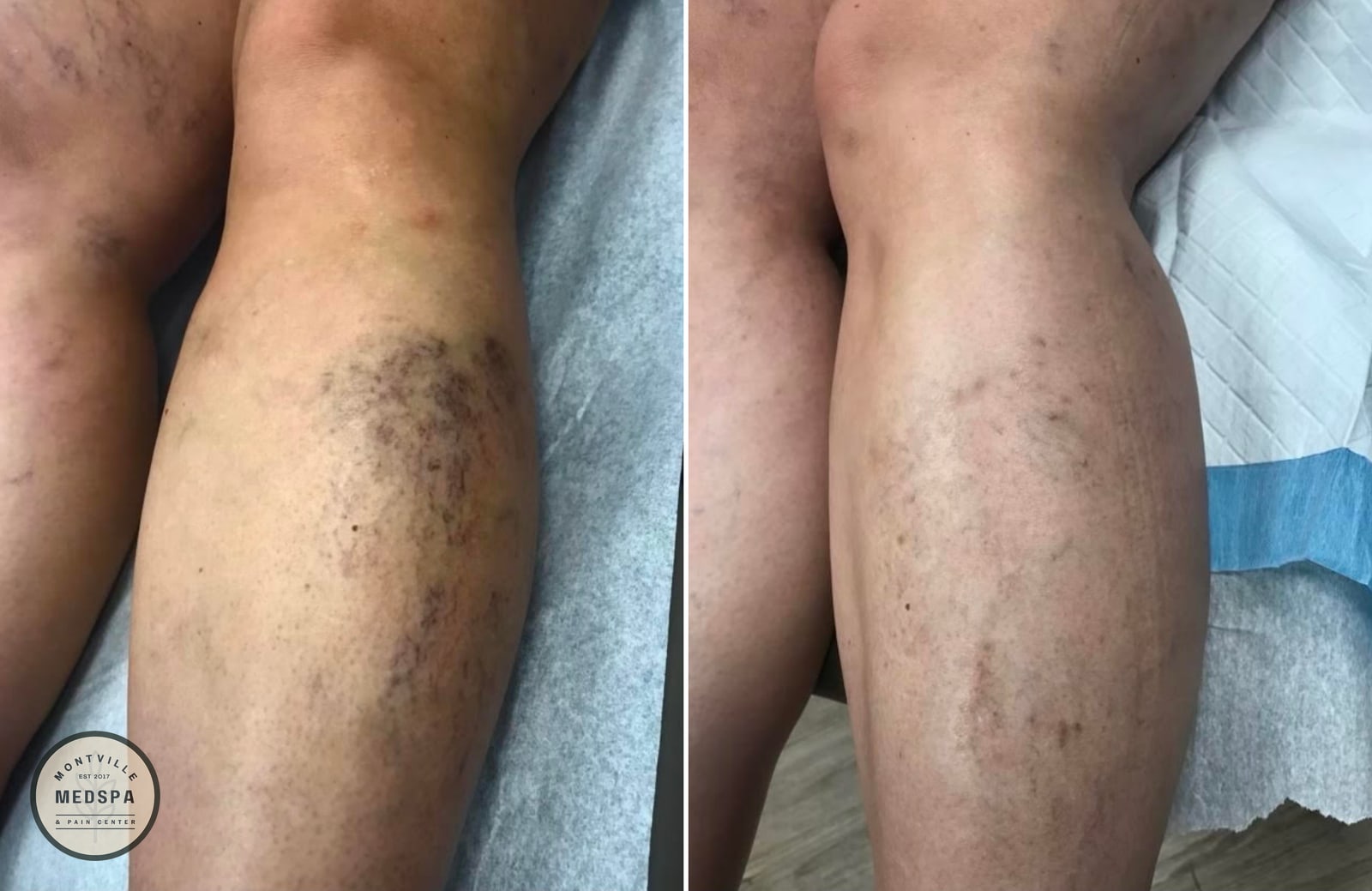
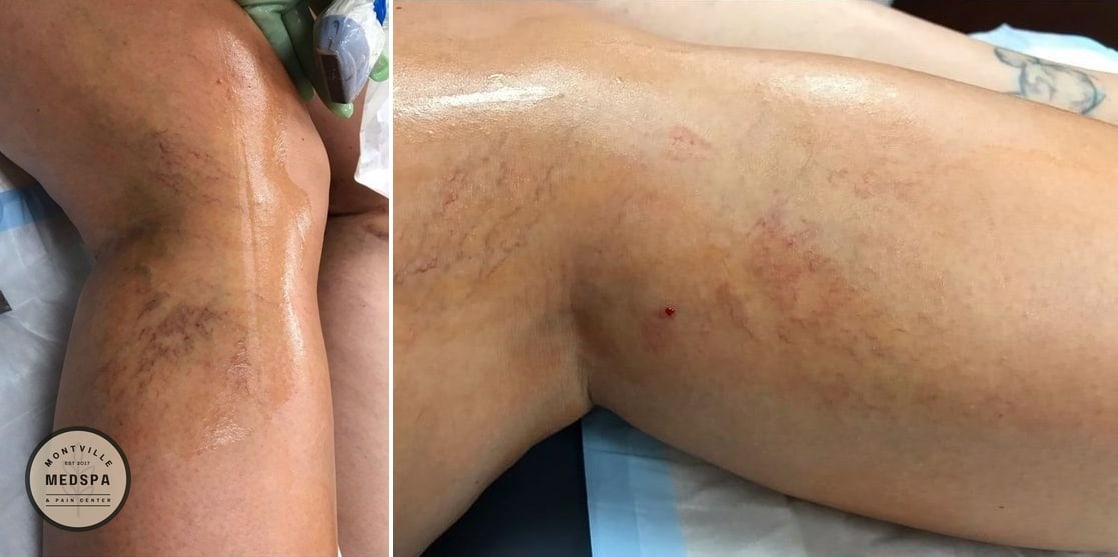
Treated veins look worse before they look better. For two to four weeks they turn darker, much like a bruise, because the vessel is closing; then they fade over roughly four to eight weeks, larger ones more slowly. If there is a date you are aiming at, count back from it.
4. Keeping the sun off
For about two days after a session, keep the treated skin away from direct sun, hot baths and saunas, and let hard exercise wait a few days. Of those, the sun matters most to your outlay: sunlight on a vein that is still healing can leave a brown mark that outlasts the vein itself by months.
5. What no injection changes
A vein that has been closed is absorbed by the body and usually does not come back. The inherited tendency to form new ones carries on, however, so some people return now and then for a touch-up. Knowing that from the start keeps a fresh thread next year from feeling like a failure.
The session itself
About thirty minutes lying down, a very fine needle, and a sting or a brief warm cramp at each vein, with no anaesthetic; any past blood clot and your current medicines are reviewed first. Stockings go on before you stand, and you carry on with your day. The office is at 624 Main Road, Suite 2B, Towaco, north-east of Morris Plains.
Morris Plains patients ask
What if the scan does turn up a feeding vein? Closing it with Varithena is a medical question that plans often cover, kept apart from the cosmetic surface work on the bill as well as in the plan — see insurance and fees.
Are there side effects to weigh against the cost? Bruising, a temporary darkening along the treated vein and, once in a while, a small brown mark that fades over months. Serious complications are uncommon, and the treatment has been in routine use for decades.
More about spider veins, or spider vein care for neighbouring Parsippany–Troy Hills and Hanover.
Real results
Before & after
Photos of real patients, shared with their written consent. Results vary from person to person.
Tell us what’s going on
A consultation is a conversation and an examination, not a sales appointment. Dr. D’Alessio will tell you what she thinks is causing it, what can be done about it, and — when that is the honest answer — that you do not need a procedure.