
Donna D’Alessio, MD
Montville Pain & Veins · Serving North Haledon, NJ
Spider Vein Treatment for North Haledon, NJ
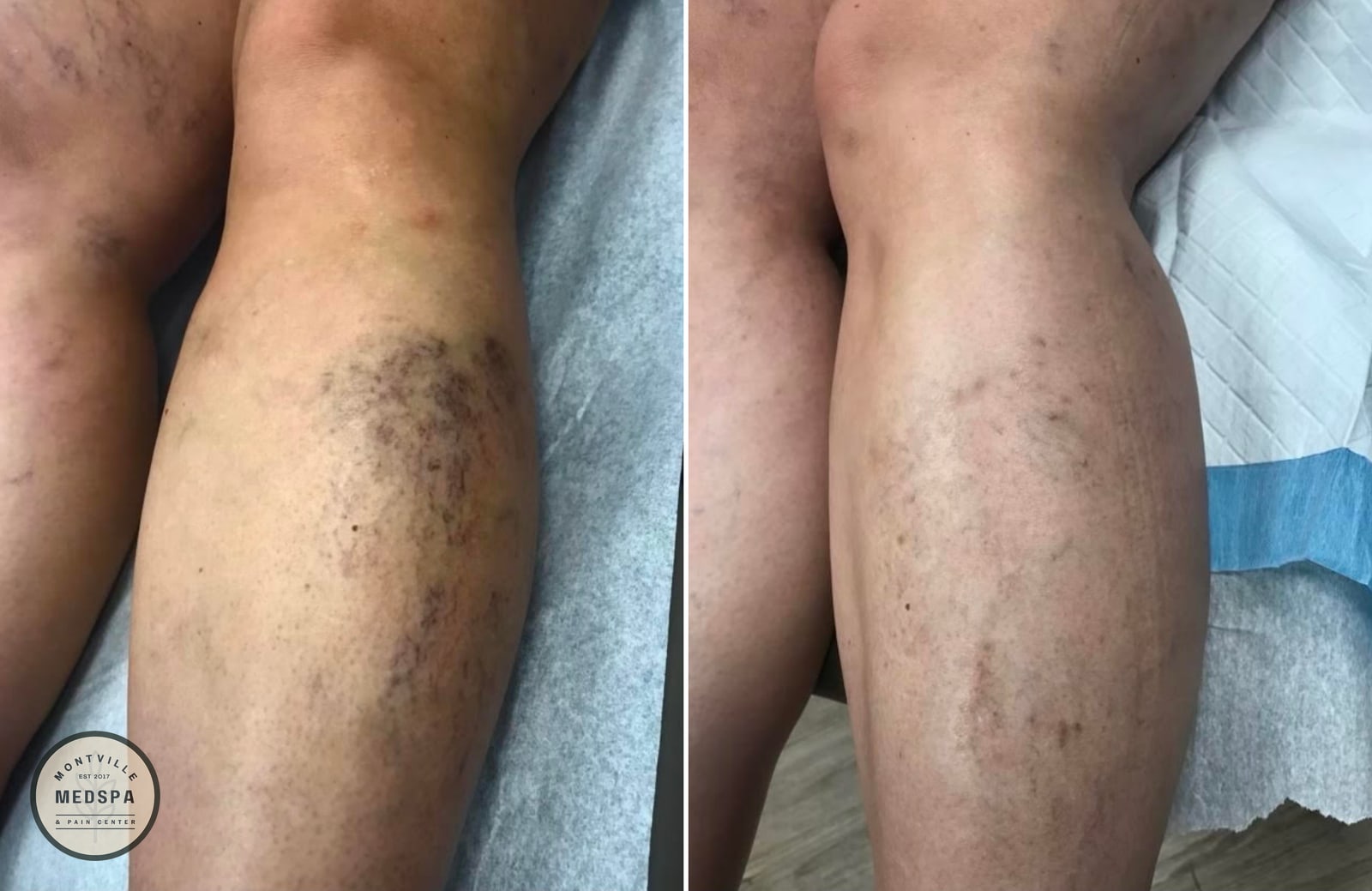
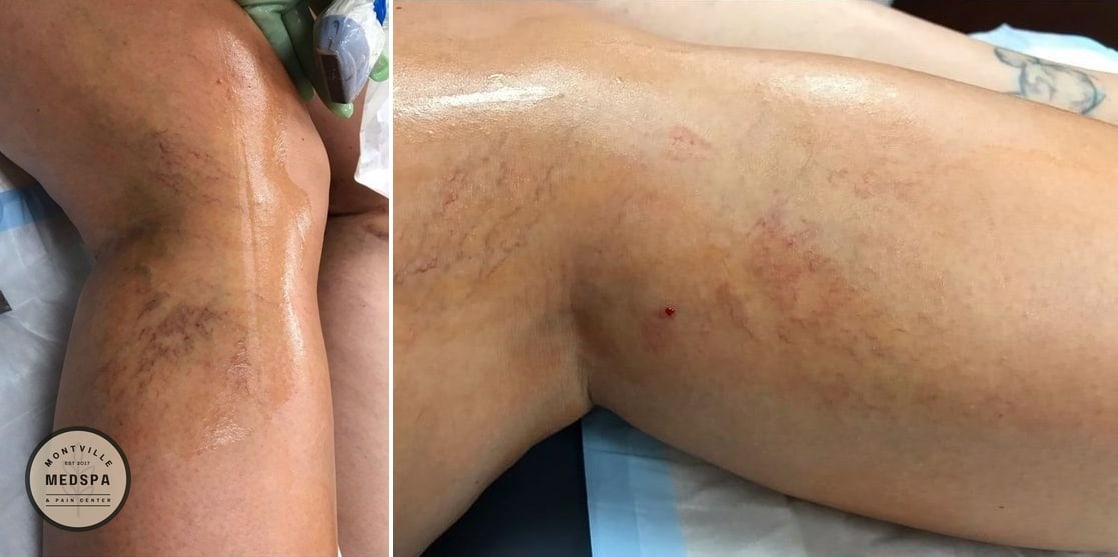
If a parent's legs looked like this, yours may too — fine red and purple veins cleared with sclerotherapy in Towaco, with the family history taken seriously.
No referral needed to book · We check your benefits before anything is scheduled · 624 Main Rd, Suite 2B, Towaco, NJ 07082
A trait you may have inherited
Spider veins are tiny vessels in the skin, usually under a millimetre across, that have widened enough to show as red or blue-purple lines and webs on the thighs, calves and ankles. They are very common, particularly in women, and the tendency runs strongly in families; pregnancy, hormonal change and long hours on your feet add to it. If you can picture a parent’s or a grandparent’s legs that looked much like yours, that inheritance is worth bringing to the appointment, because it bears on three things.
1. Which family history you have
There are two kinds, and they mean different things. Spider veins themselves being common in your family explains why they have appeared, and on their own they are usually a cosmetic matter. Varicose veins in a parent or sibling carry a further meaning: they are among the clues that the threads on your own legs could be fed by a larger vein below whose valves have failed. Dr. Donna D’Alessio asks about both.
2. Whether a scan should come first
Other clues point the same way: clusters crowded at the ankle or along the inner calf, a leg that aches or feels heavy, and veins that refilled after earlier treatment. When any of them is present, a standing duplex ultrasound maps the leg before a single injection, because thread veins treated over an open source fill again from below, and a refluxing vein it turns up is dealt with first. When none is present, no scan is suggested.
3. What later years may bring
A vein closed by sclerotherapy is broken down and absorbed by the body, and it usually does not come back. An inherited tendency carries on, though, and new spider veins can still form over time, more readily when they run in the family. Some people return now and then for a touch-up. Better to know that at the start than to mistake it for failure later.
The session itself
You lie down, the skin is cleaned, and each vein receives a small amount of solution through a very fine needle; most people notice a brief sting or a warm cramp lasting seconds. No anaesthetic is used. Compression stockings go on before you stand, and you leave and carry on with your day. Treated veins usually look darker and bruised for two to four weeks, then fade over roughly four to eight. For about 48 hours afterwards, keep hot baths, saunas and sun away from the area.
North Haledon patients ask
Is it worth treating them if more may come? A treated vein usually stays gone, and many people see a clear difference after one or two sessions. Dr. D’Alessio estimates what your legs will need once she has examined them.
Will my insurance pay? When the aim is appearance, usually not. A feeding vein found on a scan is judged separately, as a medical problem, and plans often cover closing it; you are told which applies before committing. See insurance and fees.
Where is the office? At 624 Main Road, Suite 2B, Towaco.
Read more on spider veins, or see how they are approached for Haledon and Wayne.
Real results
Before & after
Photos of real patients, shared with their written consent. Results vary from person to person.
Tell us what’s going on
A consultation is a conversation and an examination, not a sales appointment. Dr. D’Alessio will tell you what she thinks is causing it, what can be done about it, and — when that is the honest answer — that you do not need a procedure.