
Donna D’Alessio, MD
Montville Pain & Veins · Serving West Caldwell, NJ
Spider Vein Treatment for West Caldwell, NJ
Fine red, blue and purple leg veins cleared with sclerotherapy — and an honest word on whether yours are cosmetic or a sign of something deeper.
No referral needed to book · We check your benefits before anything is scheduled · 624 Main Rd, Suite 2B, Towaco, NJ 07082
Thread veins, explained
Spider veins — telangiectasias, to a doctor — are tiny vessels just beneath the skin that have widened enough to be seen. Most measure under a millimetre, red or blue-purple, branching like a web across the thighs, calves and ankles. Unlike varicose veins they lie flat. They are very common, particularly in women, and they run strongly in families; pregnancy, hormonal changes and long hours standing all add to them.
Cosmetic, or a sign of something underneath?
For many people they are just what they look like: a cosmetic nuisance, treated and priced as a cosmetic procedure. For others they are the surface end of a leaking vein higher up the leg. These are the clues Dr. Donna D’Alessio looks for:
- clusters gathered around the ankle or the inner calf
- legs that also ache or feel heavy
- veins that returned after earlier treatment
- varicose veins elsewhere in the family
Where any of those is present, the leg is mapped with a duplex ultrasound before a single vein is injected. Where none is, the scan adds nothing and you will not be asked to have one.
Start after the sun goes in
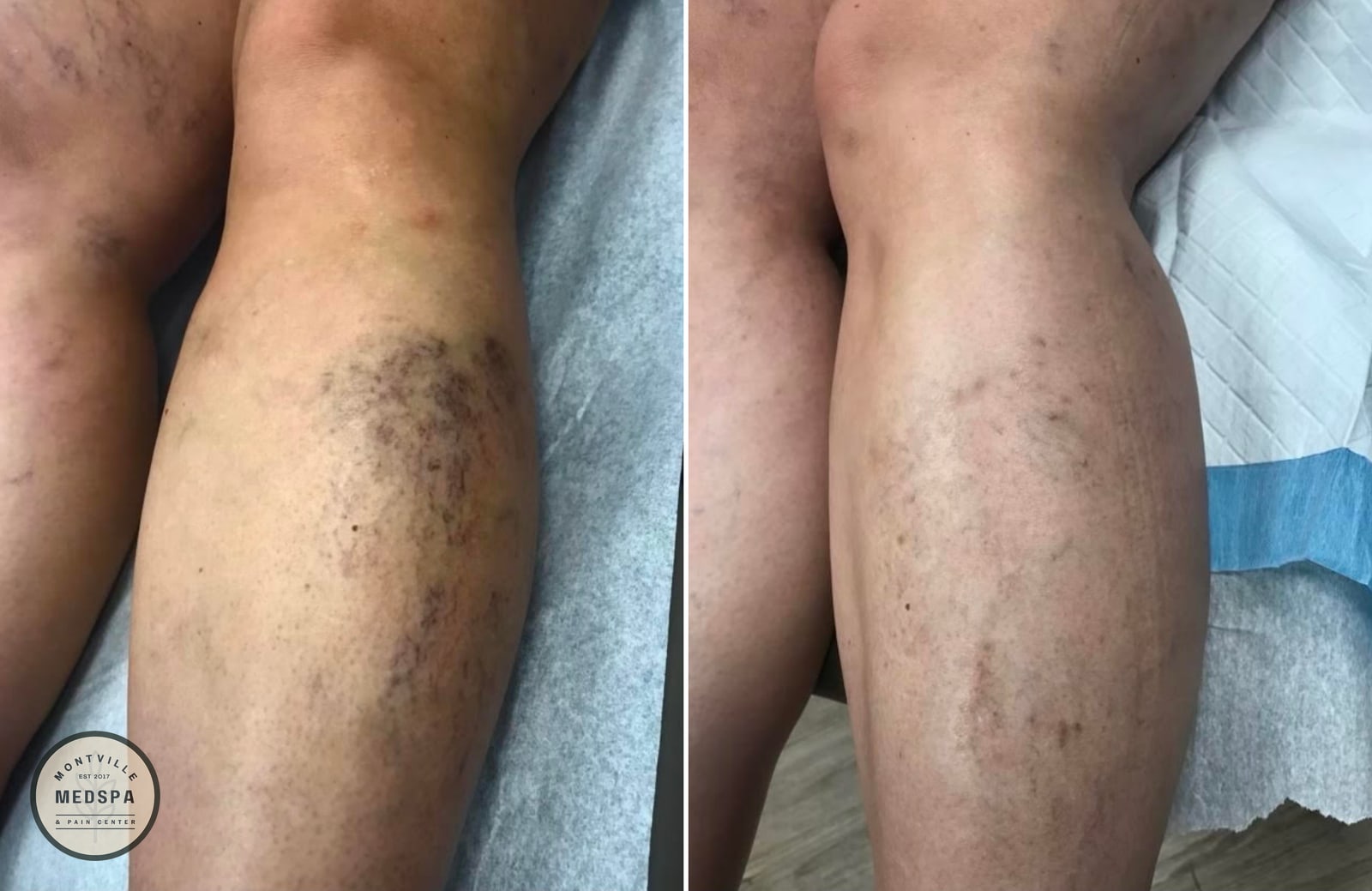
Treated veins usually look darker and bruised for two to four weeks, then fade over roughly four to eight. Sun on a vein that is still healing can also leave a brown mark that outlasts the vein itself. So the calendar matters. If the goal is clear legs at the Cedar Street or Westville pool next summer, autumn and winter are the months to begin, when the healing happens under long trousers and out of the sun.
A session in brief
Sclerotherapy takes about half an hour. A very fine needle places a small amount of solution in each vein; most people feel a quick sting, nothing more. No anaesthetic, no incision. Compression stockings go on before you stand, and you carry on with your day. For a couple of days keep away from hot baths and saunas, and give hard exercise a few days’ rest.
The cost question
Spider veins treated purely for how they look are usually not covered by insurance. If the scan does find a refluxing vein feeding them, treating that vein is a separate medical question that plans often cover. You are told which side of that line you fall on before you commit to anything.
Questions from West Caldwell
Are spider veins dangerous? By themselves, rarely. Together with aching, swelling or bulging veins, they are worth having looked at properly.
Why do mine keep coming back in the same place? Usually something underneath is feeding them. Clear the surface while a larger vein keeps pushing pressure in, and they fill again — which is why the feeding vein is sometimes treated first.
How many sessions will I need? It depends how many veins there are and how they respond; plenty of people see a clear difference after one or two. You get an estimate once your legs have been examined.
More about spider veins and varicose veins.
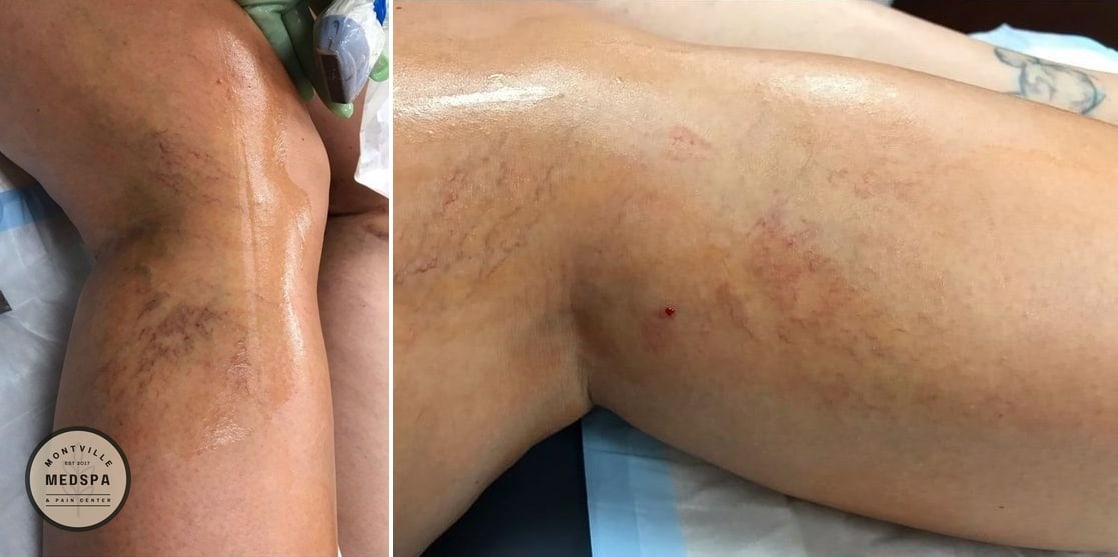
Real results
Before & after
Photos of real patients, shared with their written consent. Results vary from person to person.
Tell us what’s going on
A consultation is a conversation and an examination, not a sales appointment. Dr. D’Alessio will tell you what she thinks is causing it, what can be done about it, and — when that is the honest answer — that you do not need a procedure.