
Donna D’Alessio, MD
Montville Pain & Veins · Serving Bloomfield, NJ
Varicose Vein Treatment for Bloomfield, NJ
Before the skin changes, not after — varicose veins traced to their source with a standing scan and closed in the office, out the Parkway from Bloomfield.
No referral needed to book · We check your benefits before anything is scheduled · 624 Main Rd, Suite 2B, Towaco, NJ 07082
Look at the ankle, not only the vein
A raised, rope-like vein is the part of venous disease people notice. The part worth watching sits lower down, around the ankle, where the skin records how long the pressure has been building. Bloomfield residents who come to Montville Pain & Veins often mention the bulge first and the ankle almost as an afterthought. It deserves to be the other way round.
How the pressure works its way down
When the one-way valves in a leg vein stop closing, blood falls back and pools. The pressure is greatest at the bottom of the leg, so that is where it shows first and worst. Over months and years it tends to pass through recognisable stages:
- Evening swelling that leaves sock marks and has gone by morning.
- Swelling that no longer clears overnight, with legs that ache or feel heavy by mid-afternoon.
- Brown staining around the ankle, and dry, itchy patches over or near the vein.
- Skin that thickens and tightens across the lower calf.
- A venous ulcer — an open sore, usually just above the ankle, that will not stay healed while the pressure behind it carries on.
Not everyone travels that path, and some people with large varicose veins never do. But it is why chronic venous insufficiency is called progressive, and why it is far simpler to deal with near the top of that list than the bottom. Marked skin changes can also appear with very few visible veins, which is one way the problem is missed.
What changes the course
Compression stockings push back against the pressure for as long as you wear them, and they are genuinely useful. They do nothing to the failed valve. Treatment means finding that valve and closing the vein it belongs to. Dr. Donna D’Alessio, board certified in Physical Medicine & Rehabilitation, maps the leg first with a duplex ultrasound taken while you stand, then closes the refluxing vein with Varithena foam, in the office under local anaesthetic. Blood reroutes through healthy veins, and nothing is stripped out.
Where an ulcer is already open the logic is the same: dressings protect the wound, while closing the vein removes its cause. See venous ulcers.
Getting to Towaco
Bloomfield has four Garden State Parkway interchanges of its own. The office is at 624 Main Road, Suite 2B, Towaco, where you can park on site.
Bloomfield patients ask
My ankle skin is stained but the veins are small. Is a scan still worth it? Yes. Staining is a sign of sustained pressure, and the ultrasound shows whether reflux lies behind it, whatever the surface looks like.
Is a sore on my lower leg that will not heal always a vein problem? No. Poor arterial supply and diabetes-related nerve damage cause ulcers too, and compression can harm an arterial one, so the leg is examined before anything is applied.
Will my plan pay for treatment? Varicose veins caused by reflux are a medical problem, and plans commonly want a scan showing reflux and a spell in compression first. Your benefits are checked before anything is scheduled — see insurance.
Real results
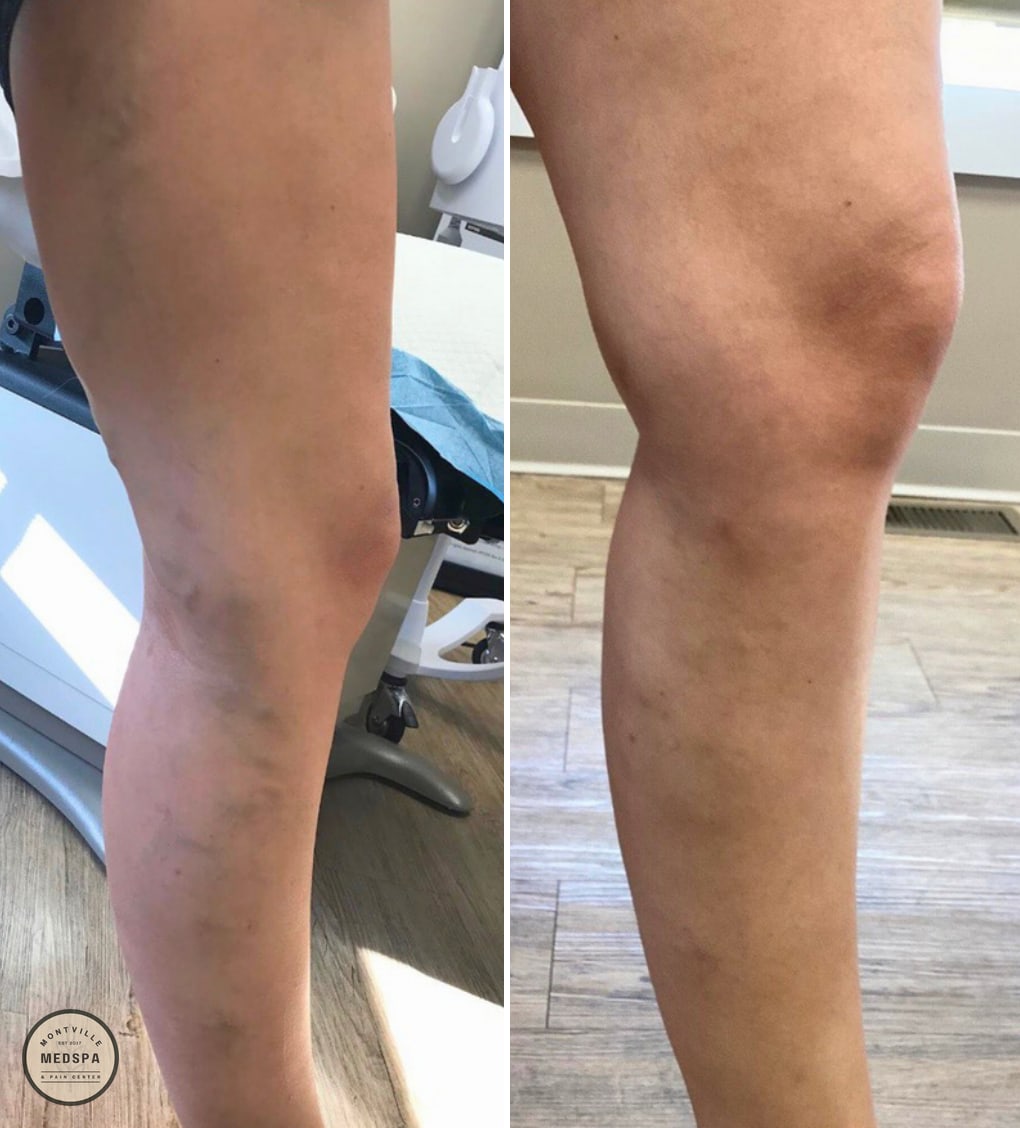
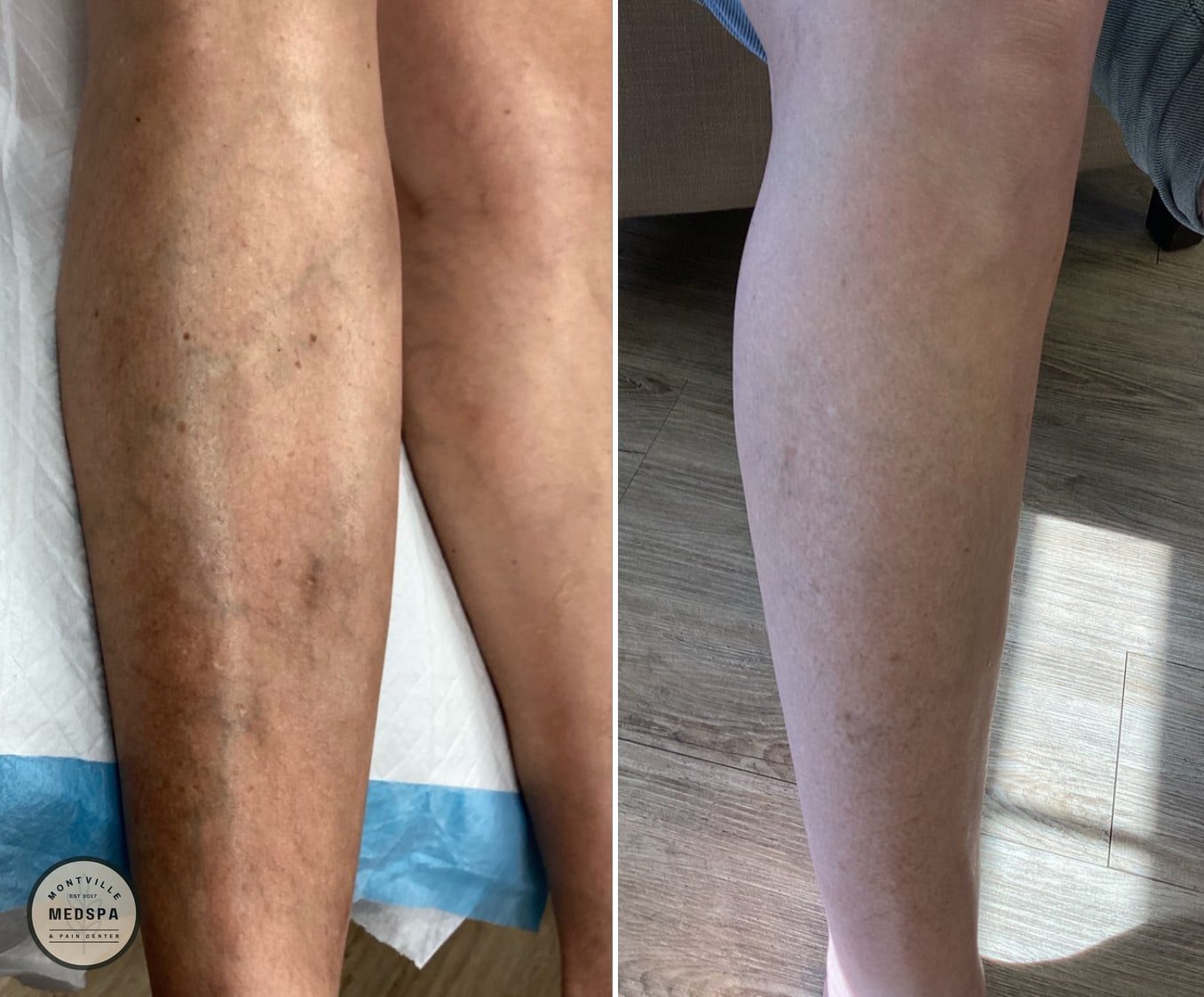
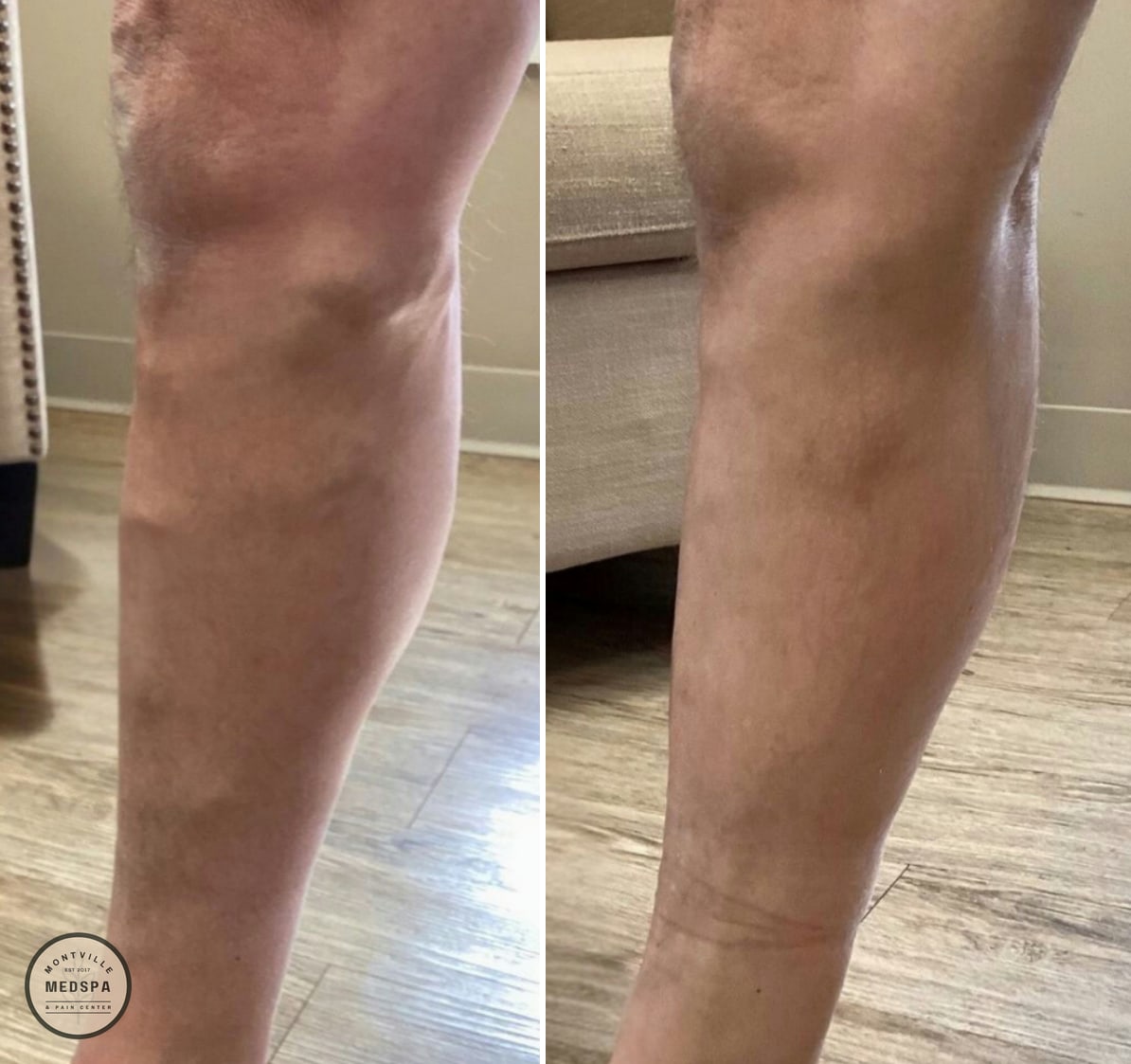
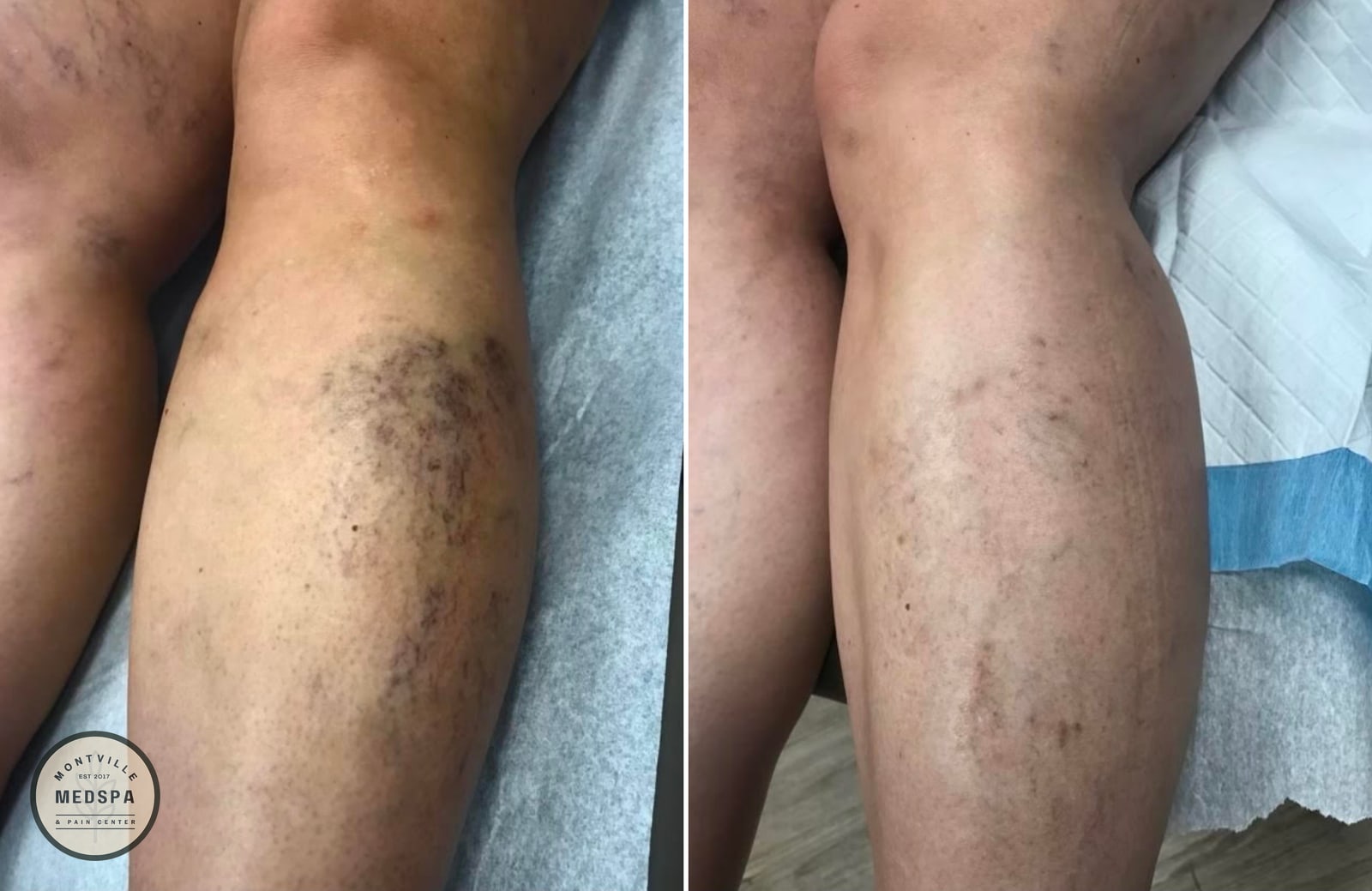
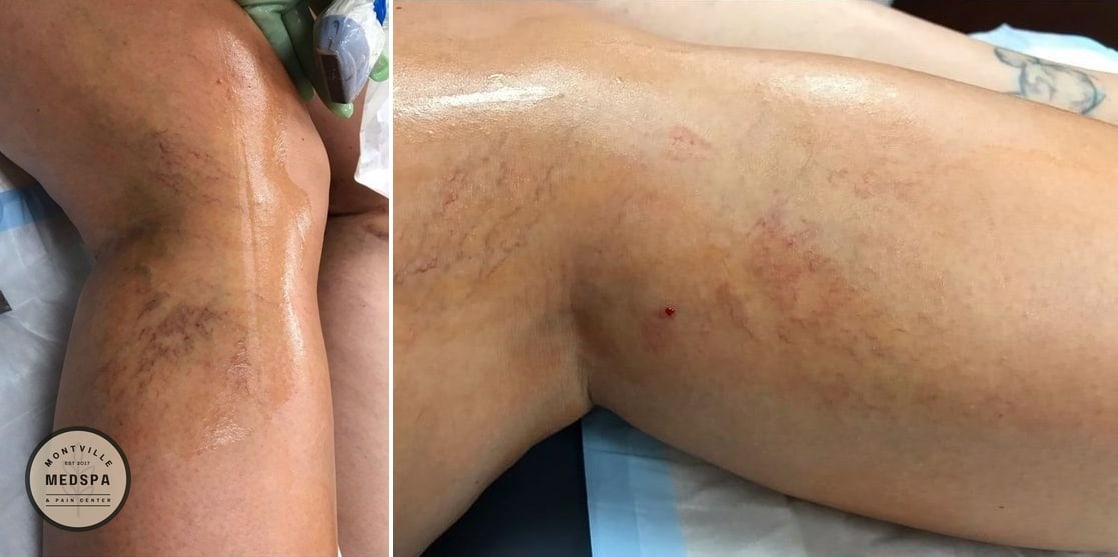
Before & after
Photos of real patients, shared with their written consent. Results vary from person to person.
Tell us what’s going on
A consultation is a conversation and an examination, not a sales appointment. Dr. D’Alessio will tell you what she thinks is causing it, what can be done about it, and — when that is the honest answer — that you do not need a procedure.