

Yes, leg cramps at night can be caused by a vein problem. When the valves in your leg veins stop working properly, blood pools in the lower leg, and that pressure can show up as cramping, aching or restless legs once you lie down. Plenty of night cramps have other causes, though, so the useful question is whether your cramps come with the other signs of a vein problem.
We see this all the time. Someone comes in about their back, or their knee, and mentions in passing that they wake up twice a week with a calf locked in a cramp. Nobody has ever connected it to anything.
Why would bad veins cause cramps?
Your leg veins have to push blood uphill, back to the heart. They do it with help from your calf muscles, which squeeze the veins every time you take a step, and a series of one-way valves inside the veins that stop the blood falling back down.
When enough of those valves fail, blood slips backwards and collects in the lower leg. Doctors call this venous reflux, and when it has been going on for a while, chronic venous insufficiency.
All day, that pooled blood keeps the pressure in your lower leg high. Fluid leaks into the tissue. The muscles sit in that congested, swollen environment for hours. By the evening your legs feel heavy and tired, and for some people the payoff comes at night, as cramps or a restless, can’t-get-comfortable feeling.
What are the signs it’s your veins and not something else?
On their own, cramps don’t tell you much. It’s the company they keep. These point towards a vein problem:
- Your ankles or lower legs are swollen by the evening and better in the morning
- Your legs feel heavy or achy after standing, and better when you put them up
- You have varicose veins, or clusters of small purple or blue veins around the ankle
- The skin around your ankle has gone brown, reddish, dry or itchy
- One leg is noticeably worse than the other
- Your job keeps you standing for hours, or you had vein trouble in pregnancy, or it runs in the family
You can have a significant vein problem with very few visible veins, so a leg that looks fairly normal doesn’t rule it out. Our page on chronic venous insufficiency goes through the full picture.
What else causes leg cramps at night?
Quite a lot, and it’s worth knowing before you assume anything.
Common ones include not drinking enough, long days on your feet, hard exercise, pregnancy and simply getting older. Some medicines are known for it, including certain water tablets and cholesterol drugs; don’t stop anything without asking whoever prescribed it. Nerve problems from the lower back can cause cramping and odd sensations in the legs too, and that’s something we also look at here, since we treat sciatica and back pain as well as veins.
Cramping in the calf that comes on while you walk and eases when you stop is a different pattern. That can point to narrowed arteries rather than veins, and it should be checked.
How do you find out if it’s a vein problem?
With a duplex ultrasound of the leg, done while you’re standing. Standing matters, because reflux shows up when the vein is holding blood against gravity and can disappear when you lie flat.
The scan takes about thirty minutes. It’s gel and a probe on the skin, with no needles, no dye and no radiation. It shows which veins have failing valves and how far the problem goes, and it’s the map every treatment decision is built on. You can see what it involves on our ultrasound vein mapping page.
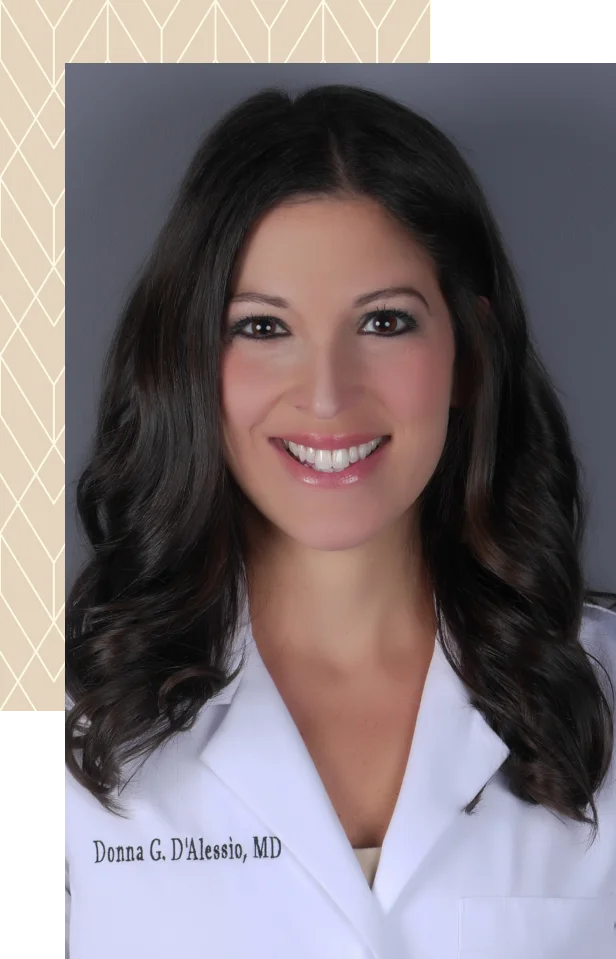
Dr. Donna D’Alessio also looks at your legs and skin and asks about the rest of your symptoms, because the answer isn’t always the veins. If it isn’t, we say so.
If it is my veins, what happens next?
Two things usually start together.
Compression stockings go on first. They push back against the pressure in the lower leg while you wear them, and a lot of people feel the difference in heaviness quickly. They manage the problem; they don’t fix the failing valve.
The vein that is refluxing is then closed so the blood reroutes through healthy veins. Depending on which vein it is and its shape, that’s radiofrequency ablation, Varithena foam, or sclerotherapy for smaller branches. These are done in the office, not in a hospital.
Heaviness and swelling tend to improve first, often within weeks, because they come straight from the pressure that has just been taken away.
Frequently asked questions
Will treating my veins stop my cramps?
If the cramps come from venous pressure, many people find they ease once that pressure is dealt with. If they come from something else, vein treatment won’t touch them, which is exactly why we find out what’s causing them before treating anything.
Are night cramps from veins dangerous?
The cramps themselves aren’t, but they can be an early sign of a condition that gets worse slowly. Left alone for years, chronic venous insufficiency can lead to skin damage and, in some people, ulcers near the ankle. It’s far easier to deal with early.
Should I wear compression socks to bed?
Usually not. Compression does its work while you’re upright and gravity is pulling blood down. Putting your feet up in the evening helps more at night. We’ll tell you what pressure and length suit you if you need them during the day.
What about restless legs?
Restless legs syndrome is its own condition, but restless, uncomfortable legs at night are also listed among the symptoms of venous insufficiency. If you have both that and swelling or visible veins, a scan is a sensible first step.
Book a vein check in Towaco
If you’re waking up with leg cramps and your legs are swollen or heavy by the end of the day, call Montville Pain & Veins at (973) 397-5304 or request an appointment. We’re at 624 Main Rd in Towaco, NJ, and the first step is an exam with Dr. D’Alessio and, if it’s needed, a standing ultrasound to see what your veins are doing.