

Donna D’Alessio, MD
Montville Pain & Veins · Serving Springfield, NJ
Varicose Vein Treatment for Springfield, NJ
Your vein scan, read finding by finding with you at the same visit — then the leaking vein closed in our Towaco office, north of Springfield.
No referral needed to book · We check your benefits before anything is scheduled · 624 Main Rd, Suite 2B, Towaco, NJ 07082
The report behind the plan
Every varicose vein plan here rests on one piece of paper: the result of a standing duplex ultrasound. It takes about half an hour, uses no needles, dye or radiation, and Dr. Donna D’Alessio goes through it with you before you leave. Patients from Springfield often arrive having been told “you have varicose veins” and nothing more. The scan replaces that phrase with specifics, and it helps to know what each finding means when you hear it.
What the scan records, and why it matters
- Competent or refluxing. A competent segment carries blood upward and holds it there. A refluxing one lets it fall back toward the foot. This is the central finding; without reflux, closing a vein has nothing to fix.
- How long the backflow lasts. A brief flicker as a valve shuts is normal. Backflow that continues is what marks a valve as failed.
- Where it starts and stops. Reflux often begins high in the great saphenous vein on the inside of the leg, or in the small saphenous vein behind the calf, well above the bulge you can see. Its extent sets how much of the vein needs treating.
- Diameter. How wide the failing vein has stretched.
- Any sign of clot, old or current. This is checked before anything is planned.
Because the scan is done standing, gravity is putting the veins under load. A leg examined lying flat can look normal while reflux is obvious when the same person stands up.
From findings to treatment
When a larger vein refluxes, Varithena microfoam fills and collapses it, even where it twists, in an appointment of under an hour. Blood then travels home through healthy veins. Smaller surface branches left behind are cleared with sclerotherapy, often later. All of it happens in the office under local anaesthetic; Dr. D’Alessio does not strip veins.
Sometimes the report is close to normal. That is an answer too: the ache is coming from somewhere else, perhaps the back, a nerve or a joint. Since this practice treats those as well, a clean scan leads to an examination rather than a shrug — see is it your veins or sciatica?
Why insurers ask for the report
Varicose veins caused by reflux are a medical problem, and many plans cover treatment once symptoms and the scan support it. Most insurers require the scan before they approve anything, and some want a period in compression stockings first. We find out what your plan asks for before treatment is booked. More on insurance and fees.
Springfield patients ask
What does the scan feel like? Cool gel and firm pressure on the calf. The main demand is standing still for around half an hour.
Is the scan itself covered? A diagnostic duplex ultrasound done for leg symptoms is generally a covered medical service. Your benefits are checked before the appointment.
Can the scan change over time? A closed vein usually stays closed, but another vein can develop the same valve problem over the years, especially where varicose veins run in the family. That is why follow-up matters.
More about varicose veins and venous reflux disease.
Real results
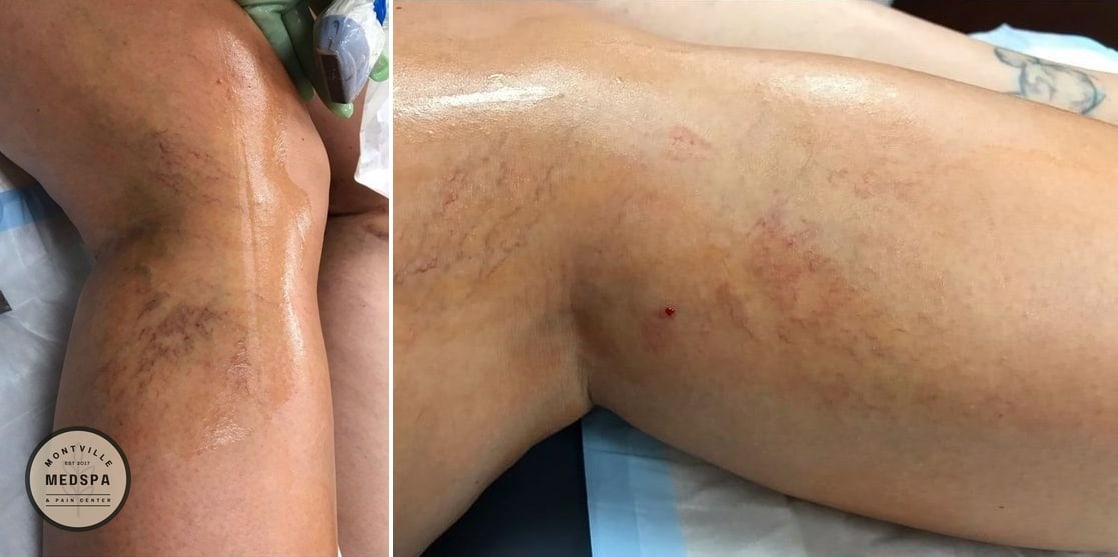
Before & after
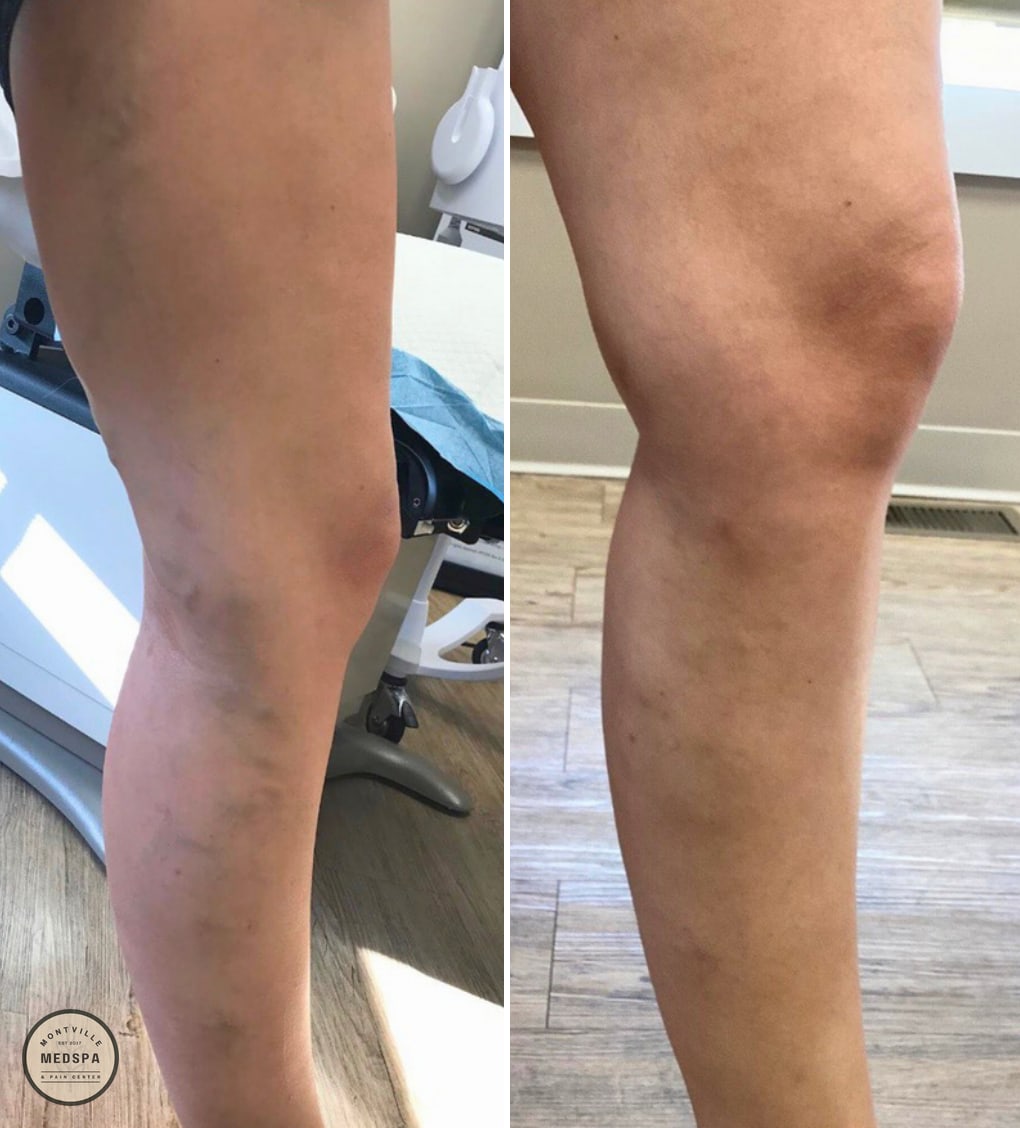
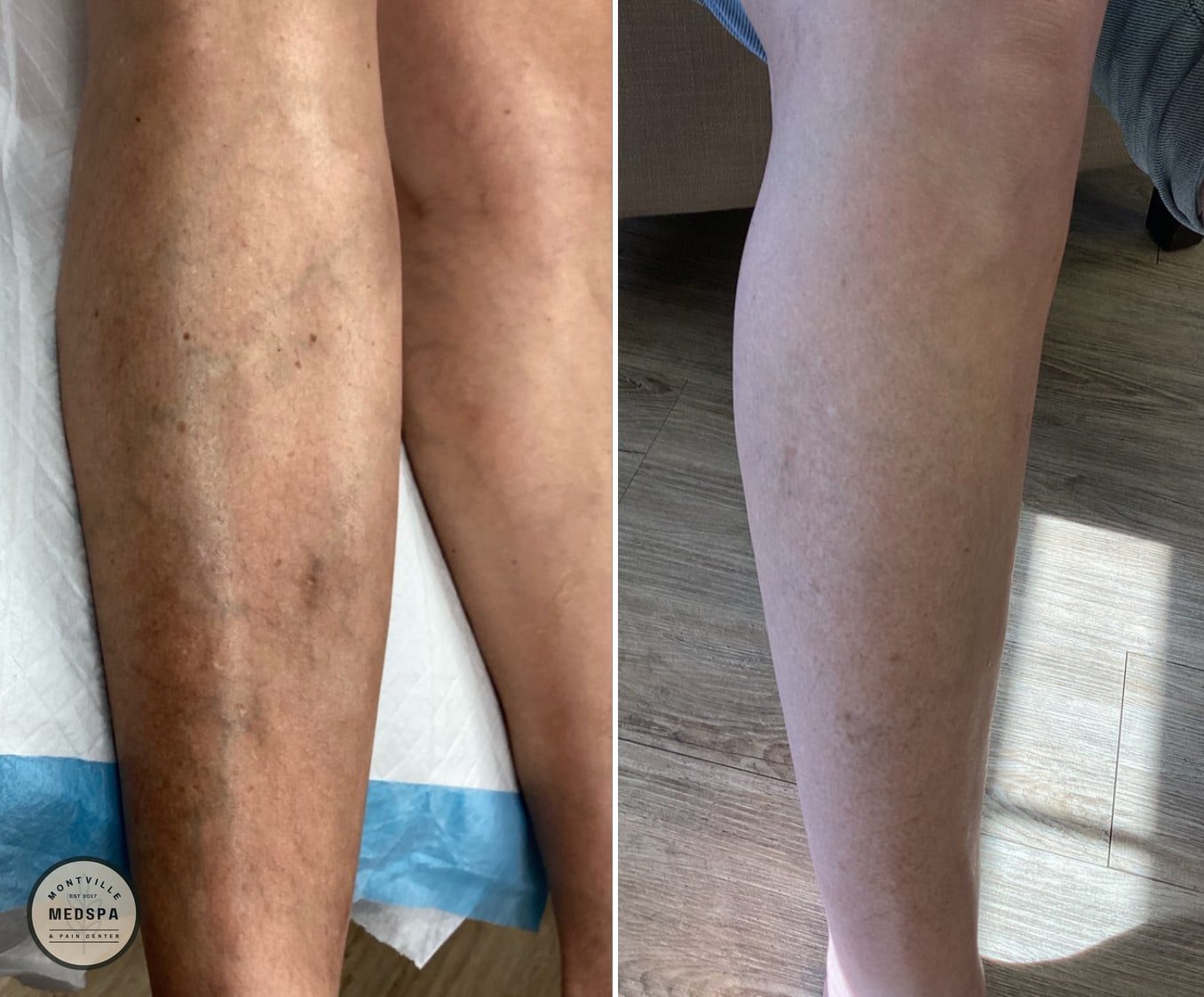
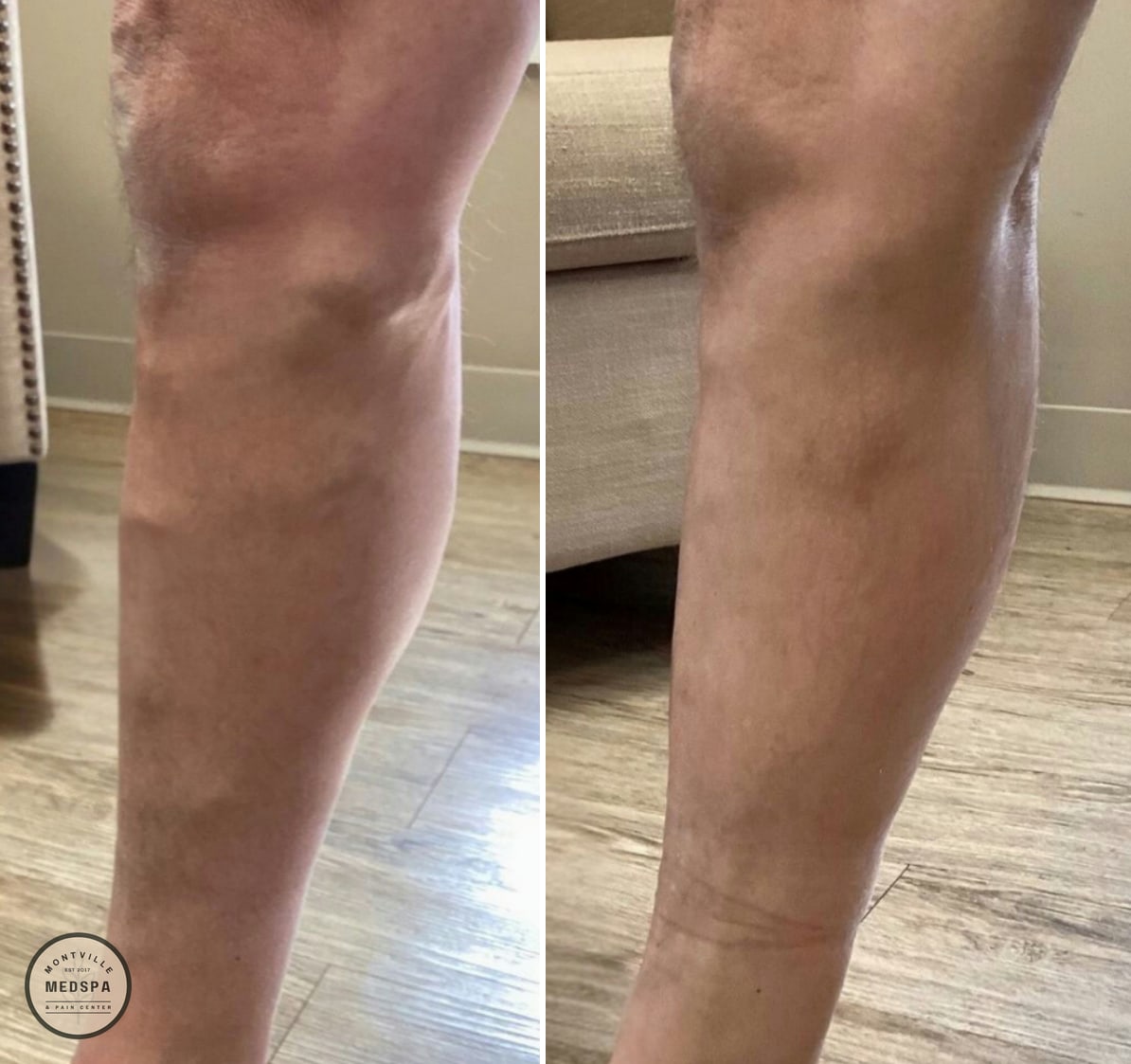
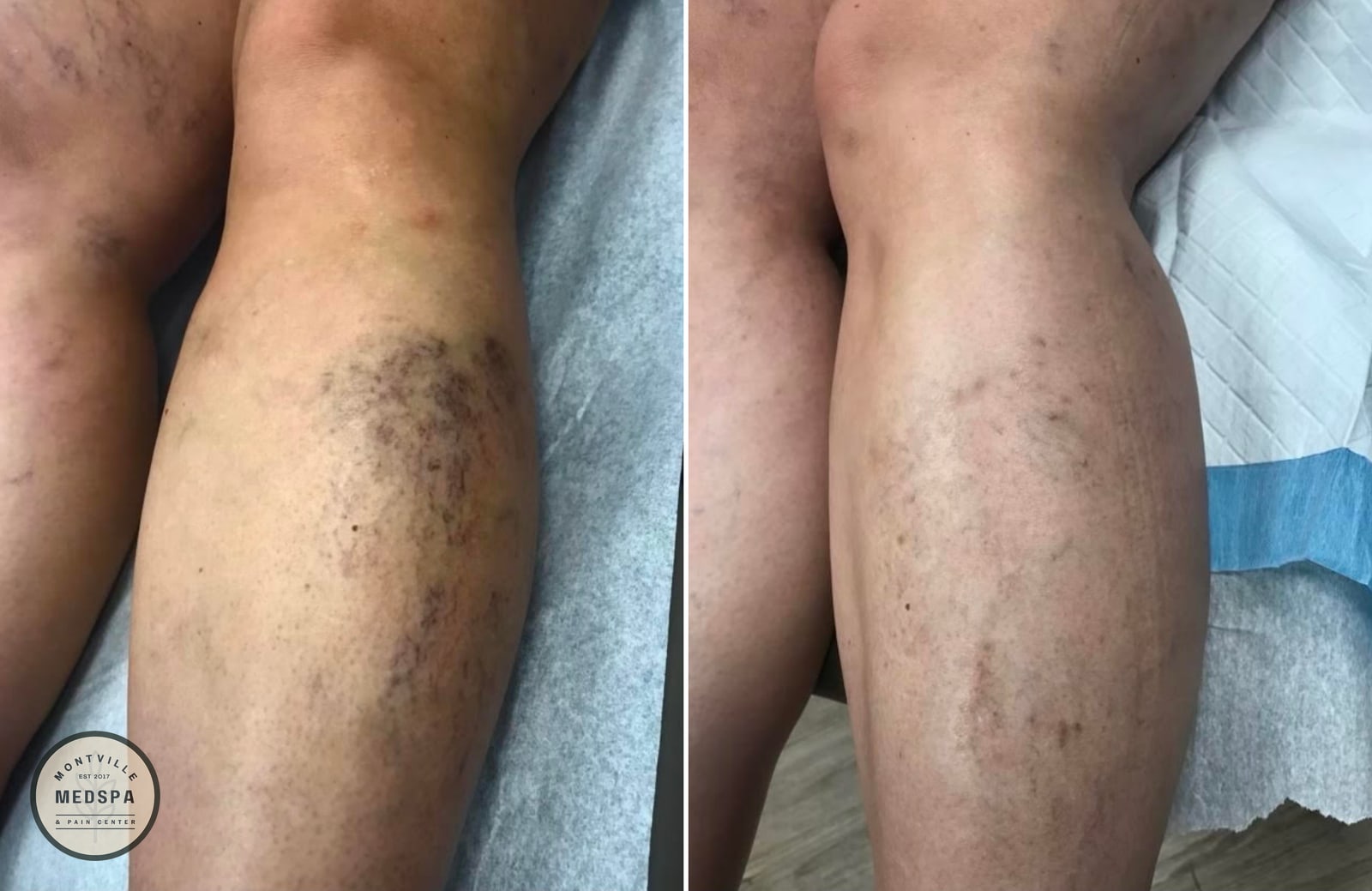
Photos of real patients, shared with their written consent. Results vary from person to person.
Tell us what’s going on
A consultation is a conversation and an examination, not a sales appointment. Dr. D’Alessio will tell you what she thinks is causing it, what can be done about it, and — when that is the honest answer — that you do not need a procedure.