

Donna D’Alessio, MD
Montville Pain & Veins · Serving Victory Gardens, NJ
Varicose Vein Treatment for Victory Gardens, NJ
A faulty vein sealed from the inside and its blood sent along healthier routes — in our Towaco office, near Victory Gardens.
No referral needed to book · We check your benefits before anything is scheduled · 624 Main Rd, Suite 2B, Towaco, NJ 07082
“Surely I need that vein?”
Hear that a varicose vein is treated by closing it, and a natural next question follows: what happens to the blood that used to travel through it? It is a fair thing to ask before agreeing to anything, and the answer begins with what the vein is doing at the moment.
A vein running the wrong way
Blood has to climb out of the leg. Each step squeezes the deep veins inside the calf muscles and pushes it upward, while one-way valves stop it sliding back between steps. When a valve in a surface vein — most often the great or small saphenous — stops closing, the blood in that vein drops back instead of rising, collects below the faulty valve and stretches the vein into the raised, twisting cord you can see. So the bulging vein is not helping the leg. It is carrying blood toward the foot and adding to the pressure in everything beneath it.
Where the blood goes once it is shut
The whole of Victory Gardens holds less than three miles of road; shut one of its short streets for a day and traffic simply takes the next one. A leg copes with a closed vein in much the same way, except that the route being shut was sending its traffic backwards.
- The deep veins take over. They already carry the great majority of the leg’s blood and absorb the closed vein’s share without difficulty.
- There is spare capacity. A leg has far more venous room than it uses, so giving up one faulty vessel costs it nothing.
- The closed vein seals. Foam makes its wall collapse and seal, and the body absorbs it over the weeks that follow.
Choosing which vein, and how
A standing duplex ultrasound of about half an hour, with no needles, dye or radiation, shows which segments let blood fall back and how far the fault runs. Dr. Donna D’Alessio, board certified in Physical Medicine & Rehabilitation, goes through the findings at the same appointment. A refluxing vein, including one that twists or branches, suits Varithena microfoam, in under an hour; leftover surface branches can be cleared later with sclerotherapy. None of it needs a general anaesthetic, and she does not strip veins.
What you notice afterwards
The pressure in the leg falls the moment the faulty vein is shut, so heaviness and evening swelling usually ease before the leg looks any different. You walk out in a compression stocking and walk daily from then on. Tightness, a cord-like feeling and bruising along the treated vein fade over a few weeks, and heavy lifting, hard exercise and hot baths wait a short while.
Victory Gardens patients ask
Can a closed vein reopen? One that has been properly closed usually stays closed. Years later a different vein can develop the same valve fault, more often when varicose veins run in the family, which is why follow-up is built into the plan.
What will my insurer expect? Usually reflux recorded on the scan together with your symptoms, and on many plans a spell in compression stockings first. Your benefits are confirmed before anything is scheduled — see insurance and fees.
More on varicose veins and venous reflux, or the same care for neighbouring Randolph.
Real results
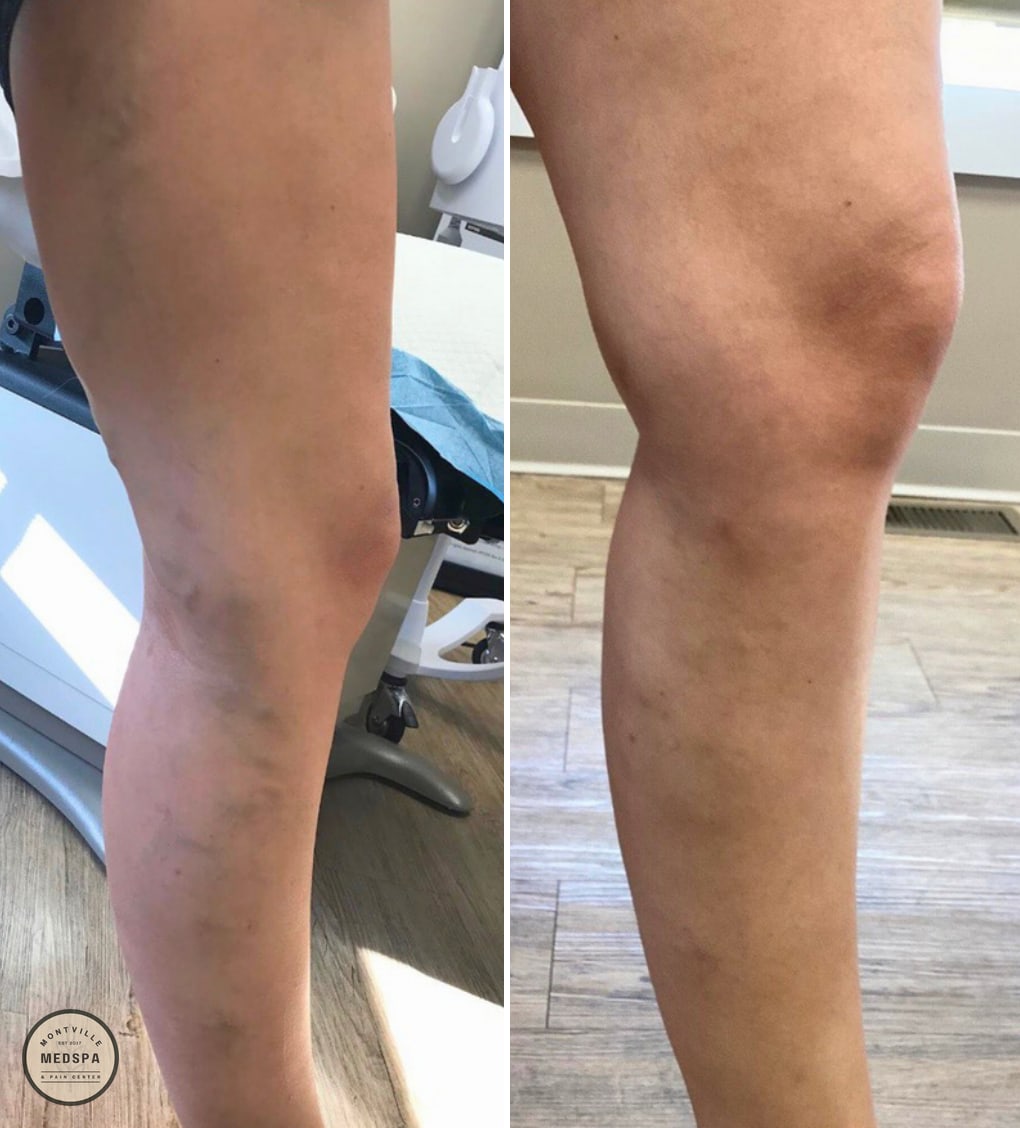
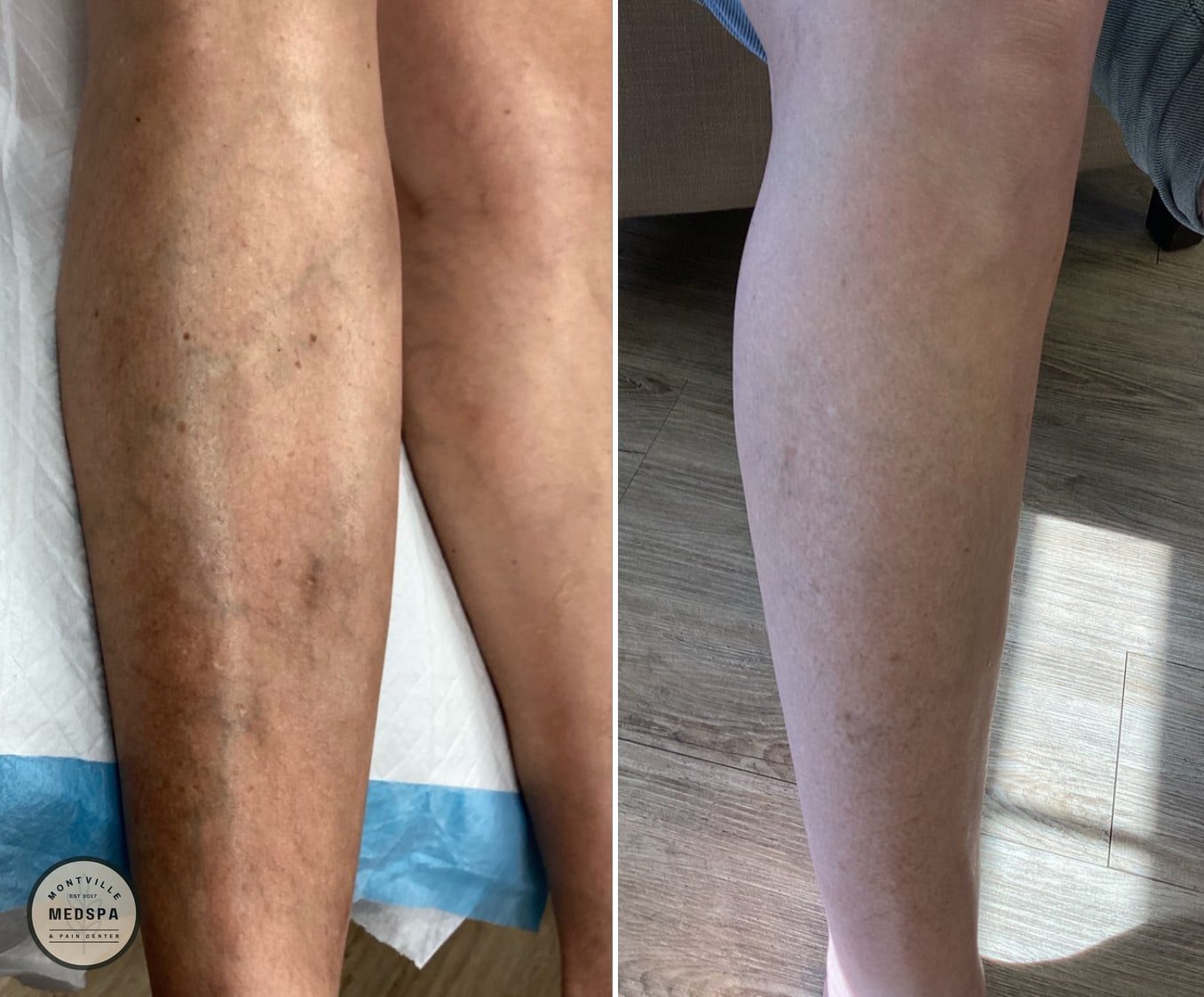
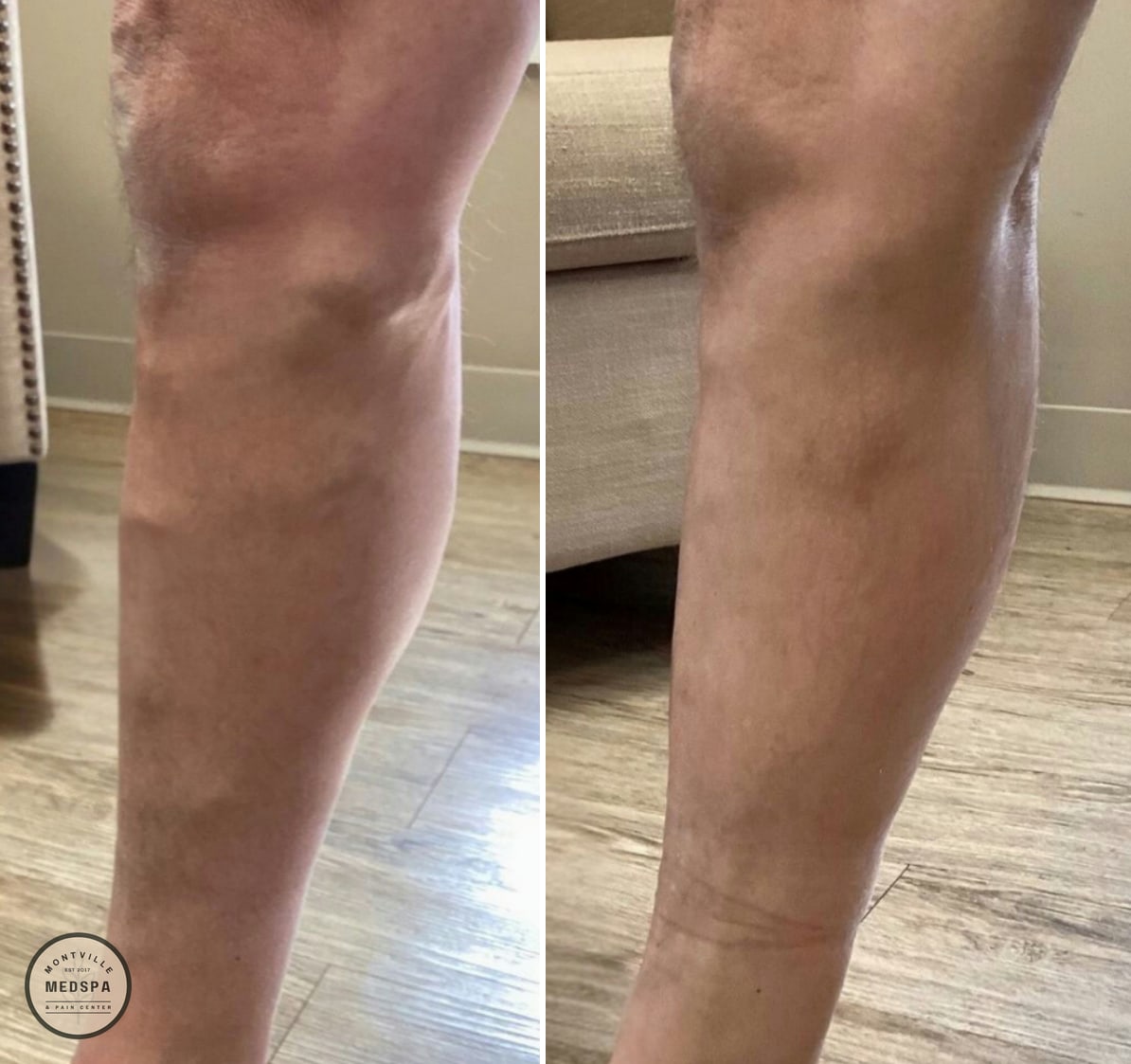
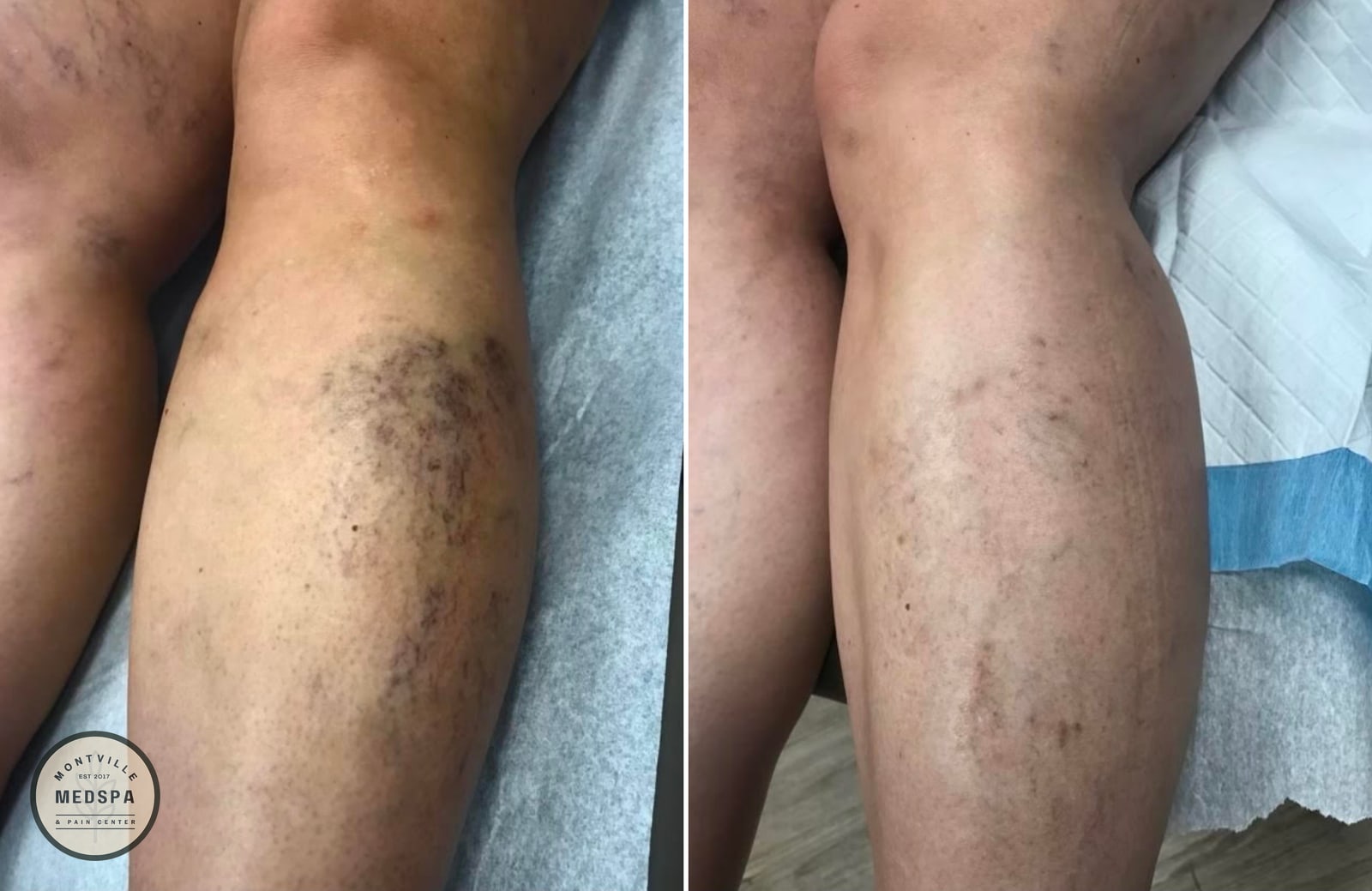
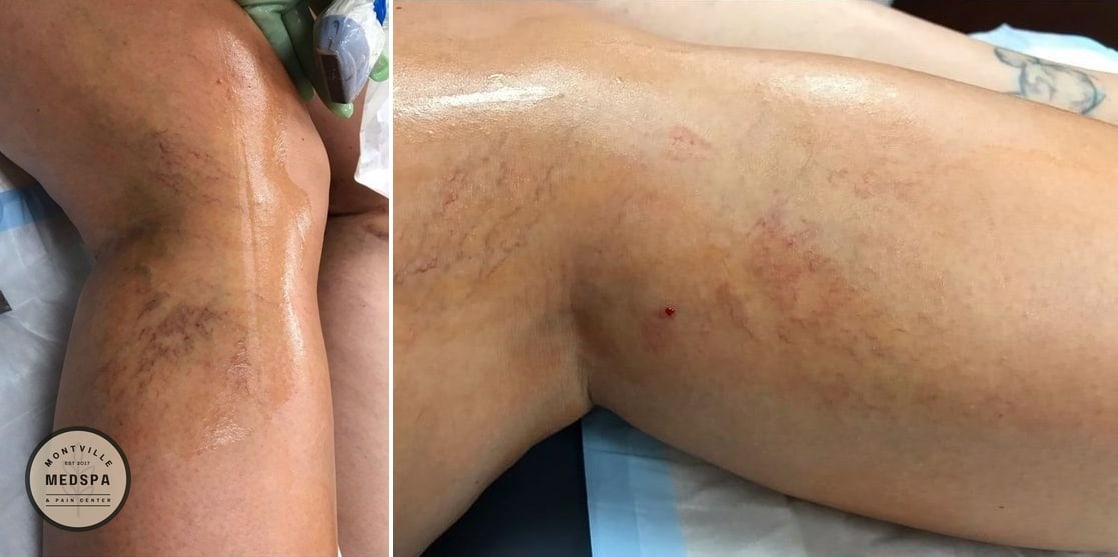
Before & after
Photos of real patients, shared with their written consent. Results vary from person to person.
Tell us what’s going on
A consultation is a conversation and an examination, not a sales appointment. Dr. D’Alessio will tell you what she thinks is causing it, what can be done about it, and — when that is the honest answer — that you do not need a procedure.