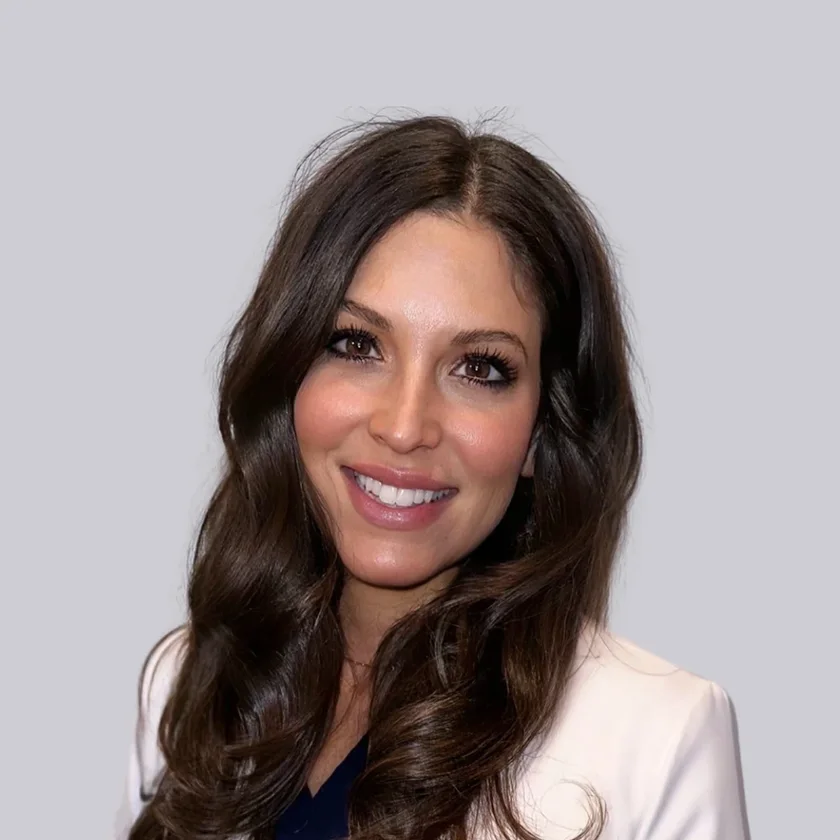
Donna D’Alessio, MD
Montville Pain & Veins · Serving Wyckoff, NJ
Back Pain Care for Wyckoff, NJ
When a walk ends early because both legs turn heavy, and sitting down brings them back — the cause found and treated without surgery in Towaco, near Wyckoff.
No referral needed to book · We check your benefits before anything is scheduled · 624 Main Rd, Suite 2B, Towaco, NJ 07082
A walk that keeps getting shorter
The route around the neighbourhood used to be easy. Now, partway along, both legs grow heavy or begin to ache, and the answer is to stop — on a bench, or leaning forward on the handle of a shopping cart — until the feeling passes and you can carry on. If that sounds familiar, it is a pattern worth having examined, because it points in a fairly specific direction.
What it usually means
Legs that tire with walking and recover with sitting or bending forward are typical of spinal stenosis: a narrowing of the canal the nerves run through in the lower back, which becomes more common with age. The pain and heaviness are felt in the legs, frequently in both of them at once, which is why the back is not always the first suspect.
Three things that can feel similar
Leg trouble on a walk is not always the spine, and the practice sees the alternatives too:
- Failing leg veins make legs heavy too, but mostly from standing still, since walking works the calf muscles that push blood back up; the ankles also tend to swell by evening. A standing duplex ultrasound settles it.
- A disc pressing on one nerve root is usually one-sided, sharper or electric, and worse sitting or coughing. See sciatica.
- The circulation in the arteries can produce aching legs as well, and the examination keeps that in view rather than assuming the back.
How it is pinned down
Dr. Donna D’Alessio, board certified in Physical Medicine & Rehabilitation, starts with the detail of the walk: how far you get, what the legs feel like, what brings relief and how long that takes. Then the examination — how the spine moves, reflexes, strength and sensation in each leg, the hips and the way you walk. An MRI mentioning narrowing is read against all of it, since a report can show stenosis in someone whose symptoms come from somewhere else.
Treatment without surgery
A rehabilitation plan sits at the centre: staying active within what the legs allow, building the strength that supports the spine, and adjusting how you sit, stand and move through the day. Where an irritated facet joint or a muscle in spasm adds its own pain, a joint injection or a trigger point injection can quiet it. Surgery is generally kept for nerve compression causing weakness that keeps progressing, or pain that has truly failed conservative care, and if you reach that point you will be told and referred.
Wyckoff patients ask
Should I stop walking until it is sorted out? No. Keep moving within what the legs allow; giving up walking weakens the muscles you need.
What would make it urgent? New weakness in a leg, numbness around the groin or inner thighs, or any change in bladder or bowel control — go to an emergency department.
How do I get there? By Route 208 toward 624 Main Road, Suite 2B, Towaco. Parking is on site.
More about back pain, or back pain care for Wyckoff’s neighbours Franklin Lakes and North Haledon.
Tell us what’s going on
A consultation is a conversation and an examination, not a sales appointment. Dr. D’Alessio will tell you what she thinks is causing it, what can be done about it, and — when that is the honest answer — that you do not need a procedure.