
Donna D’Alessio, MD
Montville Pain & Veins · Serving Wyckoff, NJ
Varicose Vein Treatment for Wyckoff, NJ
A parent's bulging veins, and now a few of your own — checked with a standing scan and closed in our Towaco office, down Route 208 from Wyckoff.
No referral needed to book · We check your benefits before anything is scheduled · 624 Main Rd, Suite 2B, Towaco, NJ 07082
It often runs in families
Ask people with varicose veins about their parents and plenty will describe a mother’s or a father’s legs. A family history of vein disease is one of the recognised reasons the risk climbs. Others sit beside it: getting older, pregnancy, a past deep vein thrombosis, and years of work spent standing, or sitting, without moving much. Inheriting the tendency does not mean inheriting the same legs. It is a reason to notice changes sooner and to have them looked at while they are small.
Signs that are worth acting on
Visible veins with nothing else going on can simply be watched; many people carry them for years without needing treatment. These are what change that advice:
- a heavy, aching feeling that builds through the afternoon
- ankles puffy by bedtime and back to normal by morning, especially if one side is worse
- cramps, or legs that will not settle, once you lie down
- itching, dryness or brown staining of the skin just above the ankle
- a vein that has grown noticeably over a few years
The skin changes are the ones to take most seriously. Pressure that has built for years forces fluid and blood cells into the tissue, and staining laid down that way may only partly clear, even once the vein feeding it is closed.
A family history is not a diagnosis
Knowing your parents had varicose veins raises the odds; it cannot say which of your veins, if any, is leaking. A duplex ultrasound can. It is done standing, for roughly thirty minutes, with no needle or dye, and both legs are normally examined. Dr. Donna D’Alessio, board certified in Physical Medicine & Rehabilitation, explains the findings before you go home, and if your veins prove sound you are told so.
Treatment, then follow-up
Where a vein is refluxing — most often the great or small saphenous — it is closed inside the office under local anaesthetic. Varithena microfoam suits it, even where it bends or branches; small surface branches are finished later with sclerotherapy. No vein is stripped out. A properly closed vein usually stays shut, but a family tendency makes it likelier that some other vein develops the same fault in later years, so a follow-up is planned from the start and new heaviness is worth mentioning early.
Wyckoff patients ask
My father had his veins stripped. Is that how mine would be done? No. Sealing a vein through a needle replaced stripping, and Dr. D’Alessio does not perform it.
My legs feel fine but my mother’s were bad. Should I come in? Without symptoms there is often nothing to treat. Heaviness, evening swelling, night cramps or skin changes are what make a visit worthwhile.
More about varicose veins, or the same care for Wyckoff’s neighbours Franklin Lakes and North Haledon.
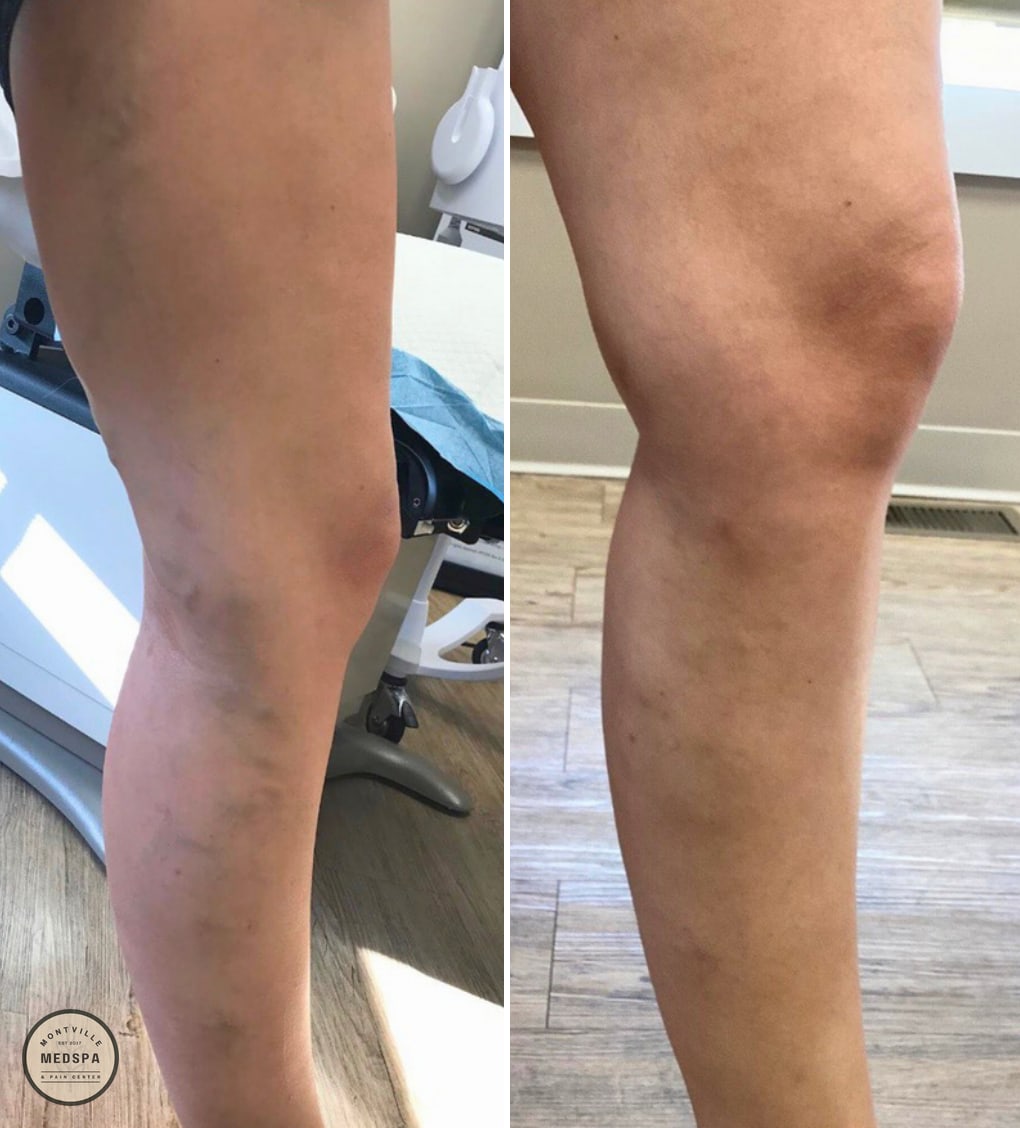
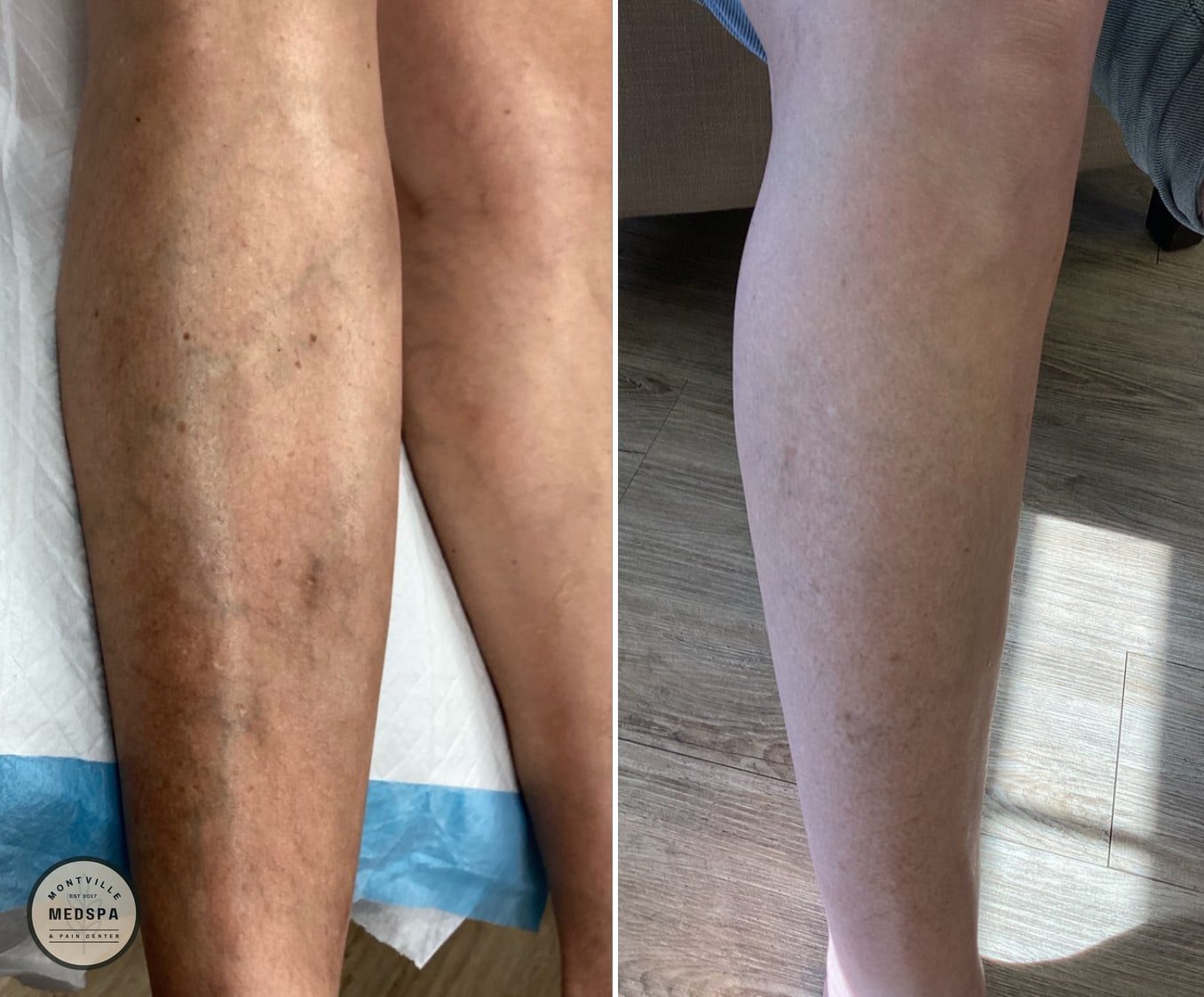
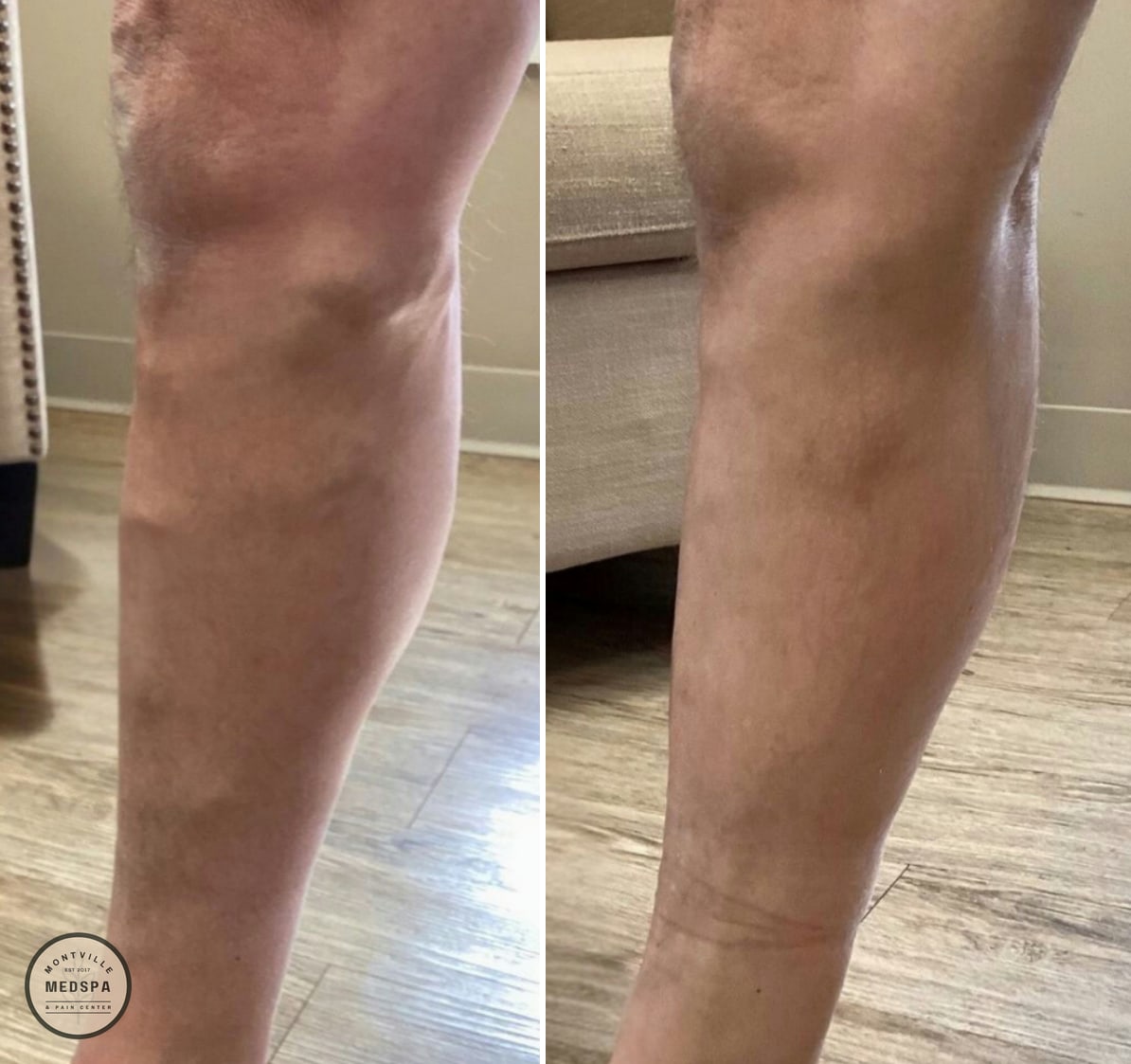
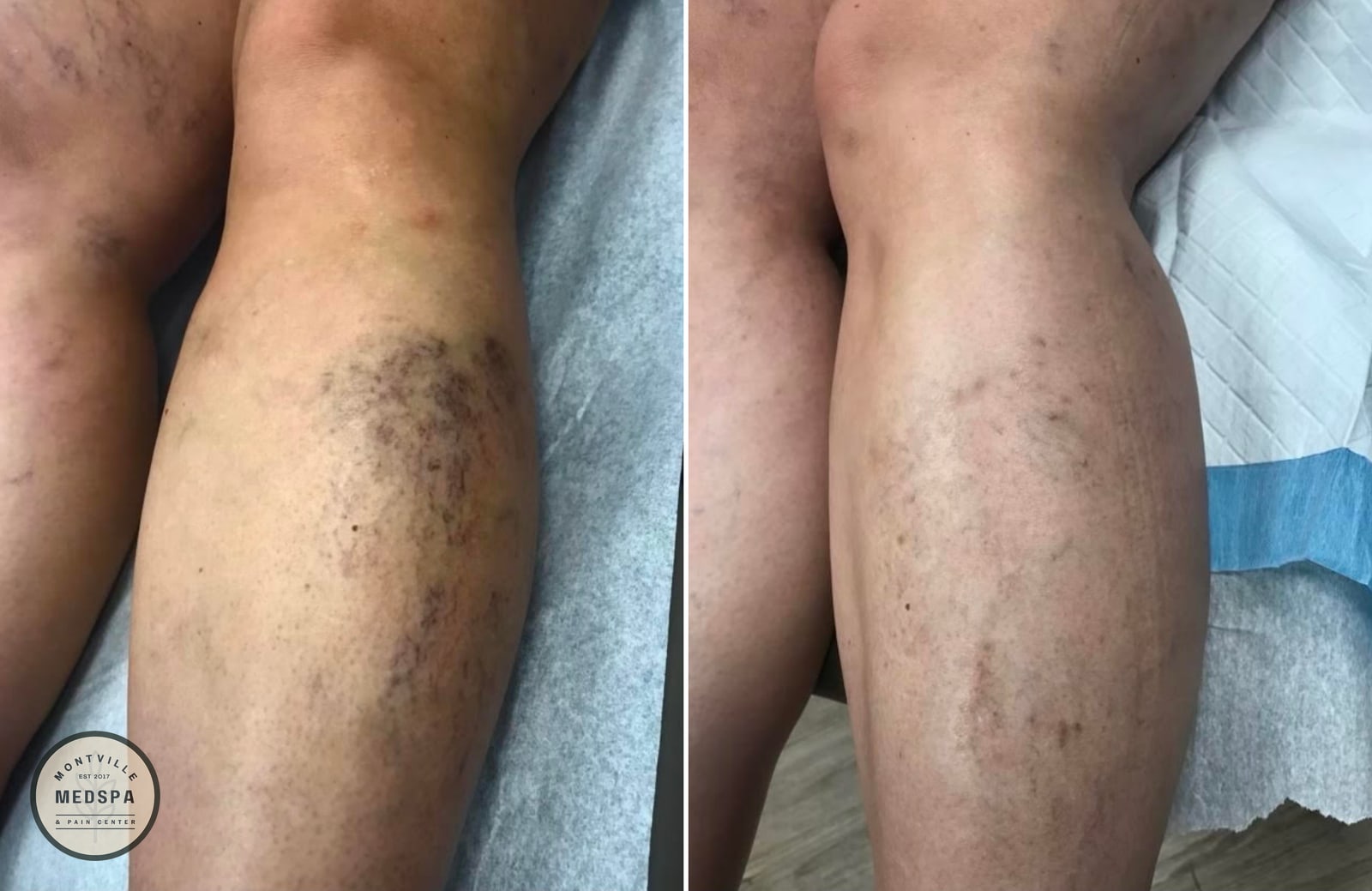
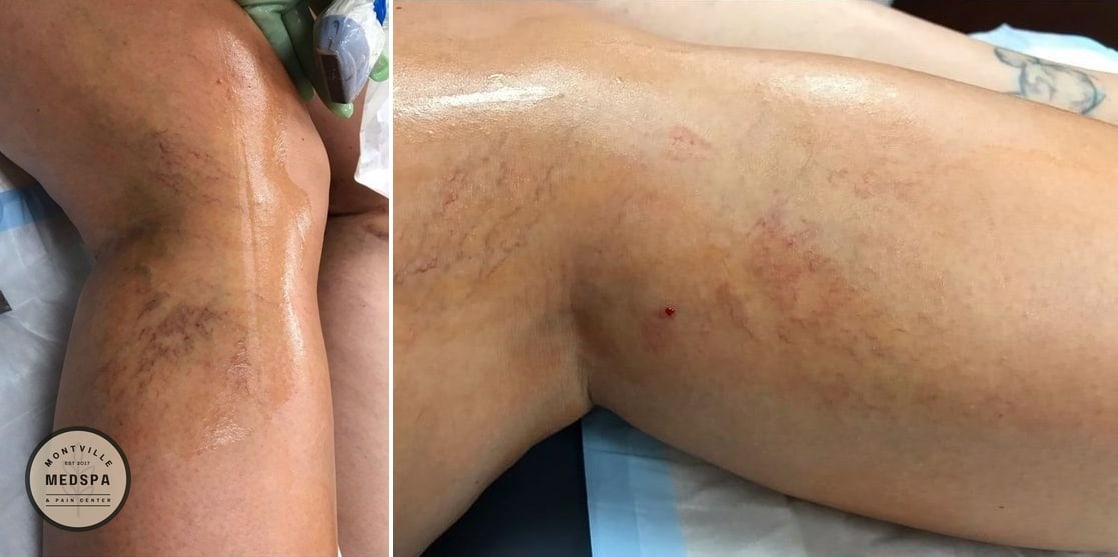
Real results
Before & after
Photos of real patients, shared with their written consent. Results vary from person to person.
Tell us what’s going on
A consultation is a conversation and an examination, not a sales appointment. Dr. D’Alessio will tell you what she thinks is causing it, what can be done about it, and — when that is the honest answer — that you do not need a procedure.